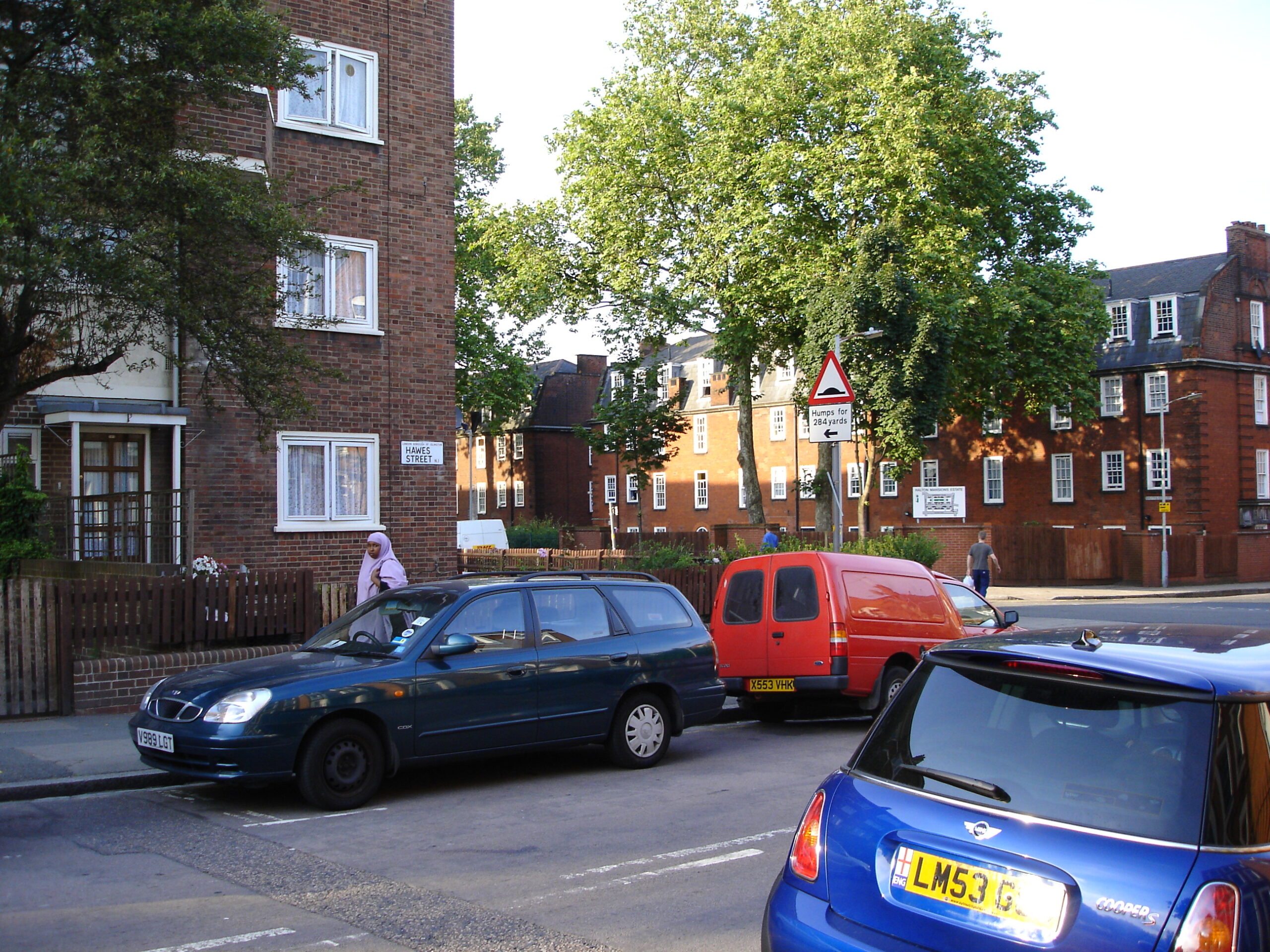
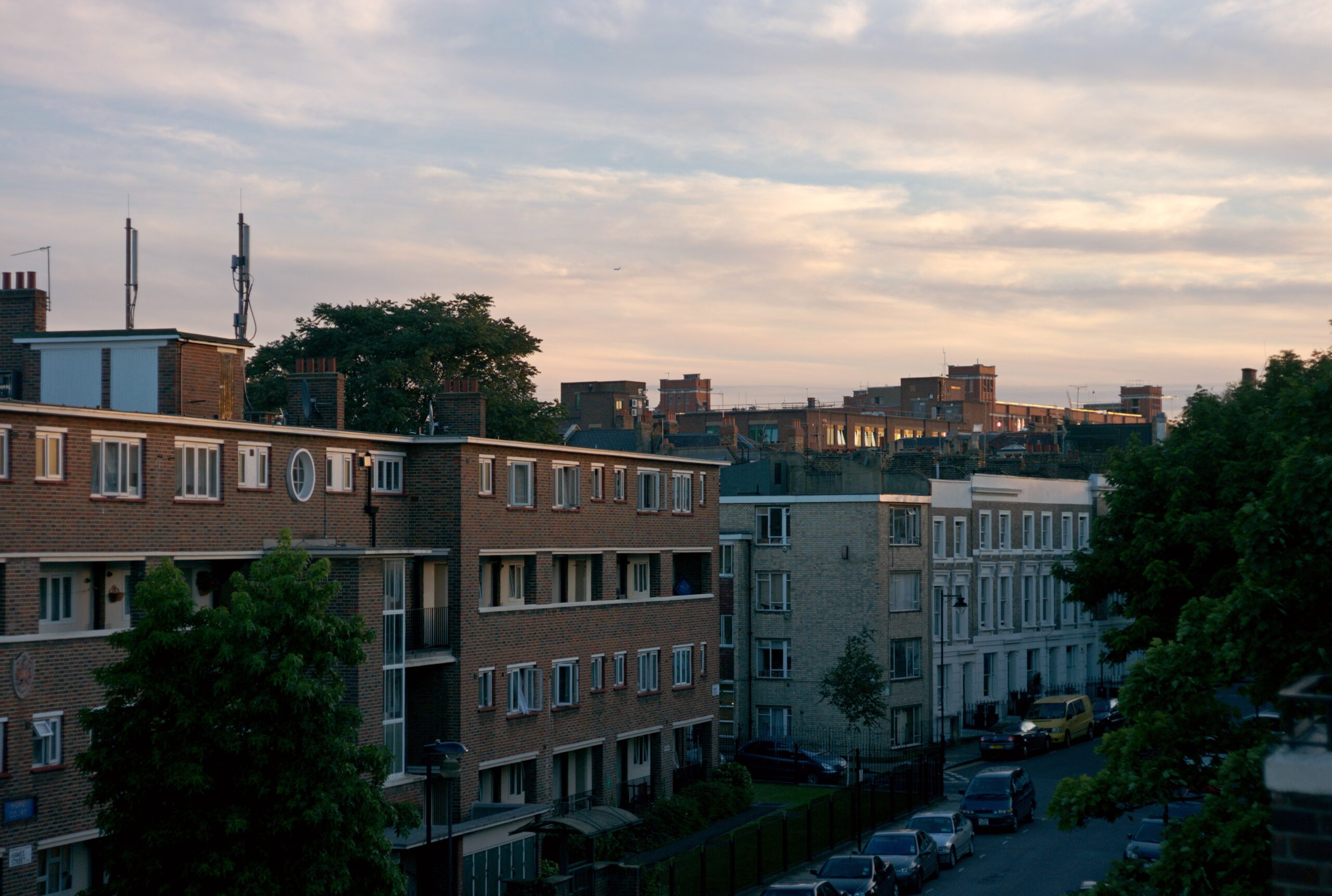
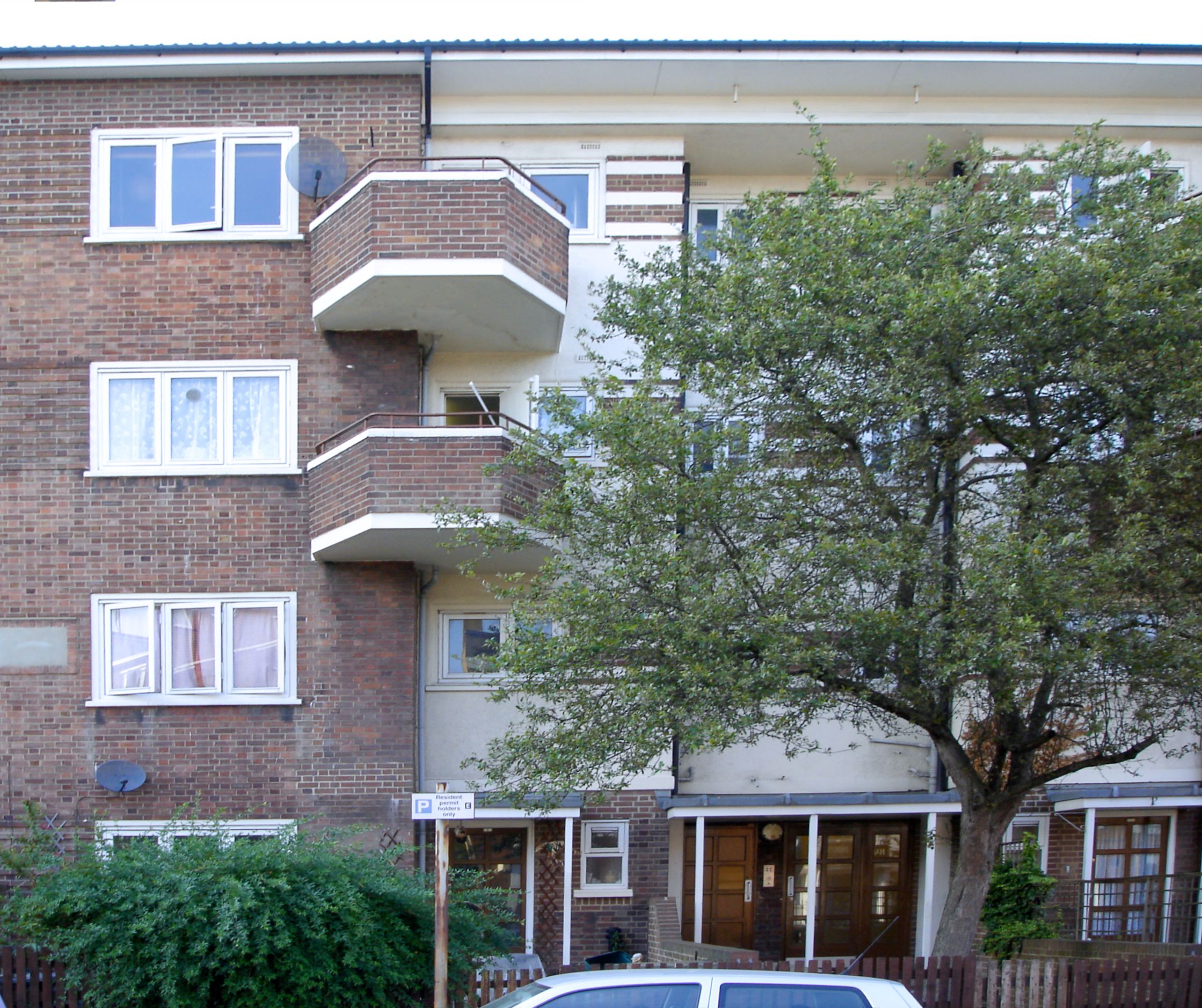
En la casa de Islington de la que hablé en un artículo anterior me pasaron varias cosas que, reunidas, harían una buena miniserie experimental. Un domingo de 2005 me levanté temprano y salí de casa para tomar un café en Upper street. Llevaba conmigo unas bolsas que quería depositar en el contenedor de reciclaje de la esquina. Bajé, salí del edificio y giré a la izquierda. Oí voces que venían de la esquina, de personas a las que los arbustos me impedían ver. Pensé que eran jóvenes tras una noche de juerga, así que, por precaución londinense, caminé bien pegado a los arbustos, con una intención inconsciente de retrasar el momento en que nos viéramos, por si acaso. Resultó ser un joven negro y muy delgado, de unos 25 años, que iba hablando solo. Al verme se calló y caminó hacia mí. Me dijo «disculpe». Me detuve y le dije «¿sí?». Entonces me dio una bofetada en la cara, bastante fuerte. ¡Vaya! Salté hacia adelante mientras él me rebasaba y me giré, para comprobar si tenía intenciones de continuar conmigo. No, no me perseguía. Se quedó allí gritando, con los brazos extendidos hacia el cielo, diciendo algo sobre dios. Se arrodilló un momento y volvió a levantarse, totalmente desinteresado por mi reacción. Poco después continuó caminando. Yo me acerqué al contenedor de reciclaje, frotándome la mejilla y caminando, como se decía antes, con la barba sobre el hombro, es decir, volviendo el rostro a un lado y a otro, como hacen los que tienen enemigos. A 15 metros del contenedor, una chica lloraba. Tendría unos 15 años y llevaba dos bolsos, uno colgado de cada hombro. Parecía que se había pasado la noche estudiando en casa de una amiga. Cuando me vio, vino en mi dirección. – Disculpe. – Sí – Me ha dado una bofetada. – Sí, lo sé. A mí también. No hay nada que podamos hacer al respecto. Ella lloró. No podía entender la lógica del asunto, era pensamiento abrumador. – ¿Estás bien? ¿Puedo hacer algo por ti? Se alejó. Me pregunté si debería llamar a la policía. Está mal que alguien abofetee a chicas jóvenes indefensas, que moleste a la gente y siembre el miedo. Pero es muy difícil de probar y, en la práctica, no ha sido un suceso tan terrible como para que cunda el pánico. Uno lleva toda la vida recibiendo bofetadas que no puede devolver. Pensé que lo más prudente era seguirlo desde la distancia para ver si se limitaba a abofetear a la gente, o si pasaba a mayores, lo que me ayudaría a tomar una decisión sobre la policía. Mientras yo hablaba con esa chica nuestro agresor se había alejado unos cincuenta metros. Fui en esa dirección. Volví a pasar por delante del portal de mi casa y, un poco más allá, en la puerta de un bloque de viviendas de protección oficial vi a un tipo de unos treinta y cinco años, corpulento, que se frotaba la mejilla mientras miraba la dirección en la que se alejaba el abofeteador. Continué caminando y pasé por delante de él. El objetivo estaba a punto de llegar a la esquina de la calle. En ese momento un coche de policía apareció por la esquina opuesta, enfrentándole, moviéndose muy despacio hasta detenerse en medio del cruce. Una mujer policía salió del coche. El tipo, que iba a doblar la esquina, al ver a la agente cambió de dirección y se dirigió hacia ella. Cuando estaban muy cerca, vi cómo él decía algo, que no pude oír por la distancia, y cómo inmediatamente intentaba abofetearla. El entrenamiento de la policía dio sus frutos y en un movimiento rápido, que habría de verse en cámara lenta si se quisiera describir en detalle, levantó su brazo, detuvo el movimiento de brazo del agresor, y agarró de tal manera a su oponente que, en lo que me pareció un solo gesto, lo dejó inmovilizado en el suelo, con un lado de la cara bien pegado al asfalto. Otros dos policías salieron del coche y se le echaron encima. Durante los diez minutos que estuve mirando no se movieron. No sé a qué esperaban, pero mis ganas de café vencieron a mi curiosidad y me marché. Su reacción frente a la policía me había confortado. El contacto que había mantenido esa mañana con ese joven no discriminaba a quienes eran abofeteables sin riesgo de aquellos que podían acarrear consecuencias. Así se podían calificar sus bofetadas de espontáneas, sin cálculo para nadie, producto de una persona que se ha abofeteado a sí mismo ya muchas veces. O quizá, lo único que buscaba era las consecuencias y, sin cálculo, salía a buscarlas sistemáticamente, hasta que aparecieran. ¿Cuántas bofetadas habría repartido esa mañana? ¿Cuántas en su vida? ¿Qué habría tomado? ¡Cuánto daría por pasar diez minutos dentro de esa cabeza! Dentro, pero en una grada, protegido, y sin consecuencias, sin muchas consecuencias, de forma calculada.
Massive Attack
Several things happened to me in the Islington house I mentioned in a previous article that, taken together, would make a good experimental mini-series. One Sunday in 2005, I got up early and left the house to have a coffee on Upper Street. I was carrying some bags that I wanted to put in the recycling bin on the corner. I went downstairs, left the building and turned left. I heard voices coming from the corner, from people I couldn’t see because of the bushes. I thought they were young people after a night out, so, out of London caution, I walked close to the bushes, with an unconscious intention of delaying the moment we would see each other, just in case.
It turned out to be a young, very thin black man, about 25 years old, who was talking to himself. When he saw me, he stopped talking and walked towards me. He said, ‘Excuse me.’ I stopped and said, ‘Yes?’ Then he slapped me in the face, quite hard. Wow! I jumped forward as he passed me and turned around to see if he intended to continue.
No, he wasn’t chasing me. He stood there shouting, his arms outstretched towards the sky, saying something about God. He knelt down for a moment and got back up, completely uninterested in my reaction. Shortly afterwards, he continued on his way. I approached the recycling bin, rubbing my cheek and walking, as they used to say, with my beard over my shoulder, that is, turning my face from side to side, as those who have enemies do. Fifteen metres from the bin, a girl was crying. She was about 15 years old and carrying two bags, one slung over each shoulder. She looked like she had spent the night studying at a friend’s house. When she saw me, she came towards me.
– Excuse me. – Yes – He slapped me. – Yes, I know. I was also slapped. There’s nothing we can do about it. She cried. She couldn’t understand the logic of it all; it was overwhelming. – Are you okay? Can I do anything for you?’ She walked away. I wondered if I should call the police. It’s wrong for someone to slap defenceless young girls, harass people and spread fear. But it’s complicated to prove and, in practice, it wasn’t such a terrible incident that it warranted panic. You spend your whole life getting slapped in the face, in one way or another, and not being able to hit back. I thought it would be wisest to follow him from a distance to see if he continued slapping people, or if he escalated, which would help me decide whether to call the police. While I was talking to the girl, our attacker had moved about fifty metres away. I headed in that direction. I passed my front door again and, a little further on, at the door of a block of council flats, I saw a burly man of about thirty-five rubbing his cheek as he looked in the direction the slapper had gone. I kept walking and passed in front of him. The target was about to reach the corner of the street. At that moment, a police car appeared from the opposite corner, facing him, moving very slowly until it stopped in the middle of the intersection. A policewoman got out of the car. The guy, who was about to turn the corner, saw the officer and changed direction, heading towards her. When they were very close, I saw him saying something, which I couldn’t hear from the distance, and he immediately try to slap her. The police officer’s training paid off and in a quick movement, which would have to be seen in slow motion to be described in detail, she raised her arm, stopped the attacker’s arm and grabbed her opponent in such a way that, in what seemed to me like a single gesture, she left him immobilised on the ground, with one side of his face pressed against the asphalt. Two other police officers got out of the car and jumped on top of him. During the ten minutes I watched, they didn’t move. I don’t know what they were waiting for, but my desire for coffee overcame my curiosity and I left. His reaction to the police had comforted me. The contact I had had that morning with this young man did not discriminate between those who were slap-worthy without risk and those who could bring consequences. His slaps could be described as spontaneous, without calculation for anyone, the product of a person who had slapped himself many times before. Or perhaps all he was looking for was consequences and, without calculation, he went out to seek them systematically, until they appeared. How many slaps had he dealt out that morning? How many in his life? What had he been using? What would I give to spend ten minutes inside that head! Inside, but on a platform, protected, and without consequences, without many consequences, in a calculated way.
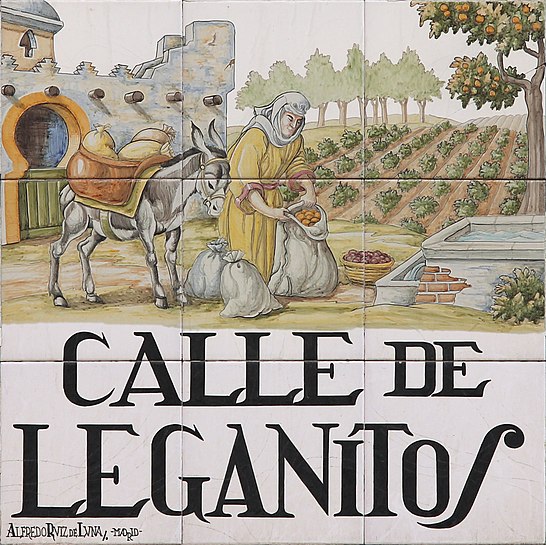
Sign of CALLE DE LEGANITOS (street) in Centro District in Madrid (Spain). Tilework by Alfredo Ruiz de Luna.
Si el ayuntamiento de Madrid fuera de izquierdas, y con sentido del humor, quizá se pudiera llegar a un acuerdo municipal por el que se le otorgara a Donald Trump el nombre de una calle madrileña. Es coherente. Pongamos por caso, la calle Leganitos, en el distrito centro, una vía importante e histórica aunque un poco marginal y oscura y, no por casualidad, llena de comercios con propietarios de origen chino, como por ejemplo el restaurante autoexplicativo “Chinese Food”, en el número 24, la peluquería Tay Yang Feng o la librería Liang You, entre otros. A partir del acto de presentación de esa resolución, el ayuntamiento de Madrid, en todas las comunicaciones públicas en las que tuviera que referirse al actual presidente de los Estados Unidos, lo haría con el nombre de “Sr. Leganitos”. Esto es algo que quizá hubiera podido suceder en los años ochenta, cuando un señor en su sano juicio decidía, como parte del rumbo social e simbólico de la ciudad, los odónimos de sus calles. En este caso, se trataría de una reversión del efecto odonímico pero, seguro, también entre sus competencias. El nombre de la calle Leganitos, según una rápida investigación, proviene del árabe «al-gannit», que significa «huertas» o «de las huertas», ya que antiguamente esa zona estaba cultivada por moriscos.
Madrid Tourism
If the Madrid city council were left-wing, and with a sense of humour, perhaps they could reach a municipal agreement to name Donald Trump after a Madrid street. It is coherent. Let’s take Leganitos street, in the central district, an important and historic passage, although a bit marginal and obscure and, not by chance, full of shops with owners of Chinese origin, such as the self-explanatory restaurant ‘Chinese Food’, at number 24, the hairdresser Tay Yang Feng or the bookshop Liang You, among others. From the act of presentation of this resolution onwards, the Madrid City Council, in all public communications in which it had to refer to the current president of the United States, would do so with the name ‘Mr. Leganitos’. This is something that could perhaps have happened in the 1980s, when a man in his right mind decided, as part of the social and symbolic direction of the city, the names of its streets. In this case, it would be a reversal of this odonymic effect, but surely, also among its competences. The name of Leganitos street, according to a quick investigation, comes from the Arabic ‘al-gannit’, which means ‘orchards’, as this area was formerly cultivated by the Moors.
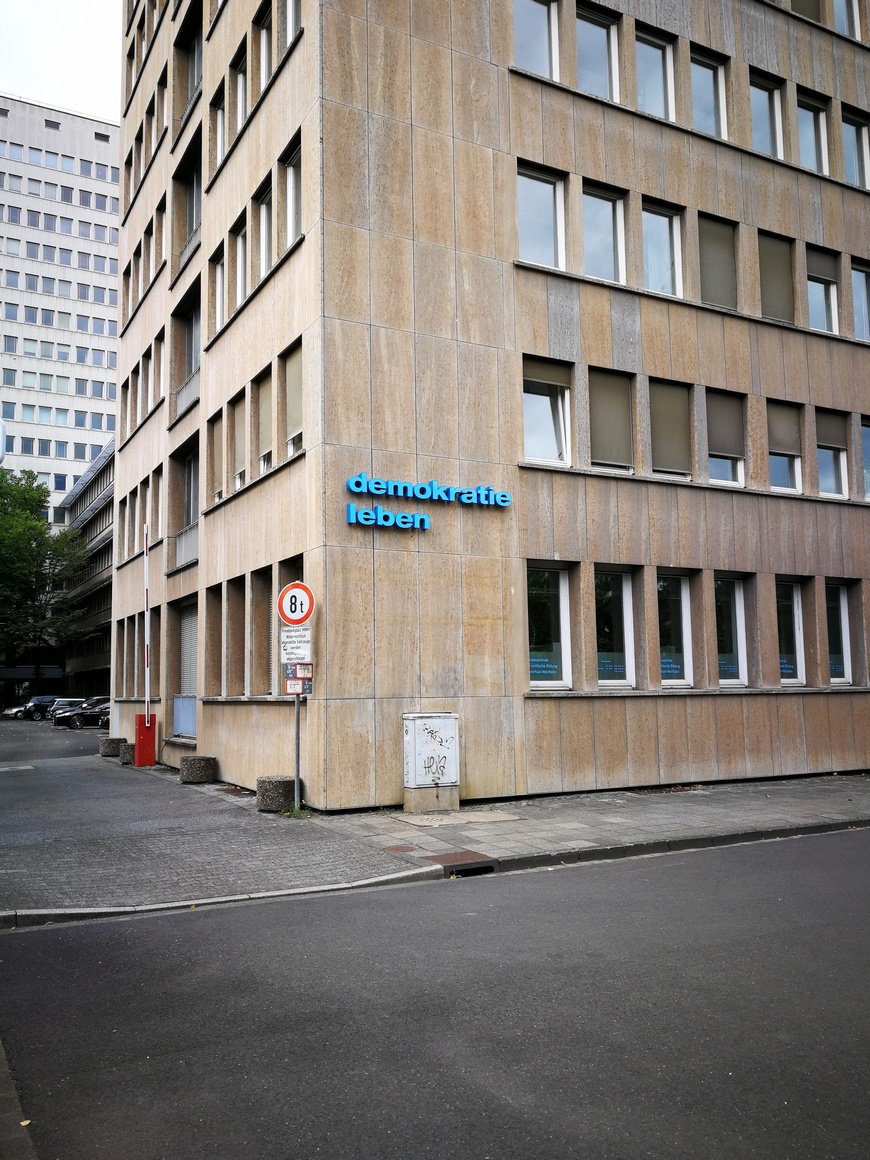
La democracia tiene la culpa del estado actual del mundo, del cambio climático, de la brecha entre ricos y pobres, de la extenuación de los recursos naturales, de la explotación del hombre por el hombre, de las crisis migratorias y, por supuesto, del triunfo de los populismos.
“No. La culpa es del capitalismo”, me contestan.
Democracia y capitalismo, lo mismo me dan porque son lo mismo, porque la una es solo una herramienta del otro, un instrumento para allanar el terreno al paso del capital, un mecanismo de control legislativo, propagandístico y psicológico por el que el capitalismo se protege de los disidentes, una compleja estructura de palos burocráticos en las ruedas de cualquier cambio a mejor.
La única diferencia entre democracia y capitalismo se encuentra en el hecho de que las gentes de buena voluntad del mundo, que quieren lo mejor para la humanidad y para el planeta, claman por “menos capitalismo” al mismo tiempo que exigen “más democracia”. Podría decir que eso es parecido a pedir “más rosas pero menos espinas”, pero de hecho la metáfora “más rosas pero menos pétalos” se adecúa mejor al absurdo fútil de estos anhelos –“más espinas pero menos espinas” es todavía más claro-.
Parece mentira que a nadie, entre esta buena gente del mundo que sin duda existe, que desea el bien para todos, que se lamenta de la forma en la que el ser humano camina hacia la destrucción y que abomina de los fantoches que, poco a poco pero inexorablemente, van tomando el mando de las instituciones mundiales, le resulte sospechoso que la democracia sea defendida por la izquierda y por la derecha, por la extrema izquierda y por la extrema derecha, por los bancos, por los empresarios, por las grandes corporaciones y los pequeños negocios, por los obreros, los ecologistas y los influencers. Todos animan a ir a votar, a celebrar esa fiesta grande de la democracia que son las elecciones. ¿Qué postura política para el cambio puede representar algo que todos apoyan sin restricción? Muchos piensan que en la democracia actual no se puede hacer nada porque no se juega limpio. Algo se podría hacer si llegaran a darse cuenta de que en una democracia no hay juego limpio porque es consustancial al juego democrático la tendencia hacia la inmundicia: es la necesidad de los gobiernos y las corporaciones de jugar sucio lo que hace que las democracias se establezcan y triunfen.
La ventaja principal con la que cuenta la democracia para resultar tan útil al capital es esta: cuando se discute sobre su conveniencia y en lo que se refiere a la vida cotidiana, los medios siempre tienen preeminencia sobre los fines. Sin embargo, dentro del ámbito especulativo y simbólico los fines mantienen intacto todo su poder. La maquinaria propagandística democrática salta con rapidez de un lado a otro, y responde sistemáticamente con los argumentos de la vida cotidiana a las objeciones conceptuales, y con argumentos ideológicos a las demandas sobre las condiciones de la vida de las gentes.
El sufragio es el eje en el que pivota esta virtud, en cuanto que todo esfuerzo se emplea en asegurar el derecho que -según afirma este sistema-, cada persona tiene de emitir su voto. El sufragio es un medio que se convierte en un fin rápidamente cuando impide que el contenido del voto sea significativo y valioso -impide que el voto sea útil, algo que, a su vez, también debería ser tan solo un medio para otro fin más elevado-. Si la consigna primordial de la democracia fuera otra que “una persona, un voto”- si fuera, por ejemplo, “igualdad ante la ley”, “ante las instituciones financieras”, o “igualdad” a secas-, no sería tan fácil usarla para los fines del capital: si las acciones políticas, de gobiernos o de ciudadanos, se contrastaran con el fin de la igualdad en lugar de con el sufragio universal, la mayor parte de ellas quedarían en evidencia como imposiciones del capitalismo. La igualdad frente a las urnas impide todas esas otras igualdades que efectivamente podrían mejor las condiciones sociales -la igualdad de oportunidades, por ejemplo, podría empezar por la igualdad a la hora de presentarse a las elecciones, un ámbito democrático donde los privilegios y las barreras de entrada han sido bien preservadas-.
El fenómeno democrático se convierte en global y su trama impenetrable porque la misma concepción de la democracia contiene un mecanismo por el que sus víctimas se autoproclaman sus portavoces, sus máximos defensores, y los represores últimos e implacables de todo lo que arroje una sombra sobre ella. La ilusión democrática se adhiere fuerte en la capa emocional de los individuos debido a su carácter adulador. Es un hecho claro que cuanto más ignorante es una persona más valora sus pocas ideas. La democracia hace más ignorante a los ignorantes porque les reafirma en las imágenes del mundo en las que ya viven y, como resultado, están siempre dispuestos a defenderlas con más entusiasmo. Es el orgullo, estúpido, es el orgullo.
Esta campaña de propaganda exhaustiva a favor de la democracia que desde hace siglos está desarrollándose desde todos los ángulos, en los medios de comunicación, en las conversaciones cotidianas, y en el ámbito más íntimo del pensamiento de los individuos y de su amor propio, resulta en un control represor de la sociedad por el que es imposible hacer una crítica del sistema sin aparecer ante los ojos de muchos como un dictador, un privilegiado, un arrogante y un desalmado -y que todas esas cualidades resulten repulsivas-. Probablemente muchos de los que hayan podido leer estos párrafos han pensado cosas parecidas del autor de este artículo ya desde la segunda línea. La democracia es un ideal, lo sabemos, siempre es imperfecta, es un fin hacia el que hay que tender. Sin embargo, ha conseguido la perfección absoluta en su aparato legitimador, acalla cualquier crítica en el mismo momento que empieza a enunciarse, impide cualquier posibilidad alternativa a ese agujero negro que todo lo absorbe, a la consigna irrenunciable de “una persona, un voto”.
“Hay democracias y democracias”, me dicen. Parece que la que tenemos es la mala y que siempre le falta un hervor. La idea del comunismo nunca se contrasta con lo que hubiera podido ser, o con lo que podría llegar a ser, sino con lo que fue -más o menos desfigurado en la narración-. ¿Por qué a la democracia, por el contrario, se le concede ese privilegio de la presunción de inocencia? Toda crítica hacia la democracia se mide con su ideal más platónico y excelso, y los innumerables casos de corrupción, de desigualdad, de consecuencias perniciosas para individuos, instituciones y sociedades, de derivas fascistas, etcétera, todos los horrores del gulag democrático, son desestimados como males menores. A cualquier mención del comunismo sigue indefectiblemente la palabra «Stalin», mientras que las loas de la democracia nunca invocan la que les sería equivalente, e incluso más adecuada, la palabra «Hitler».
No parece difícil defender que un buen rey es mejor que una mala democracia. Que un buen dictador sería mejor que una buena democracia, siendo igual de cierto, es más difícil. Es claro que los dictadores buenos son tan escasos como los mirlos blancos, e incluso esos, al contrario que los mirlos, tienen la tendencia a abandonar su cualidad específica y extraordinaria (la bondad), por indolencia, por debilidad, por presiones de sus enemigos y, sobre todo, por la presión de la democracia. Ahora bien, las buenas democracias son tan escasas o más que los buenos dictadores y tienden a la corrupción de forma naturalmente democráctica. Nunca sabremos si hay dictaduras buenas porque a los presuntos posibles dictadores, de buena o mala voluntad, con buenas ideas e intenciones o sin ellas, se les cuelga sin dilación, bien se encarga de ello el sistema democrático. Las «buenas» democracias que la gente pone como ejemplos, imperfectos pero mejores, están en vías de extinción, porque en ellas el capitalismo -es decir, el espíritu democrático- va venciendo los frenos que la tradición humanista ponía a la democracia -Suecia, como ejemplo destacado-. Las democracias más desarrolladas, como la norteamericana, son las más capitalistas.
Hace años le dije a un amigo de pocos estudios que no creía en la democracia y me contestó semi irónicamente, pero como un resorte, si quería, entonces, que Franco volviera a gobernar. Lo mismo me podría haber respondido con otra frase del repertorio: “¿Quién va entonces a mandar? ¿Tú?”. Todas las objeciones que se hacen a cualquier crítica radical -verdadera- de la democracia son siempre sofisticaciones de esa tan burda, argumentos de oposición solo un poco más evolucionados e informados que ese y, en todos los casos, recursos prefabricados extraídos de las páginas de los periódicos. “Si no democracia, entonces ¿qué?” no es una pregunta inocente, sino un arma arrojadiza contra quien pueda esbozar una respuesta. Si la pregunta fuera genuina se podría contestar: una democracia en la que los votos de los más preparados valgan más que los de los menos. Esa respuesta no significa nada, evidentemente, y habría que analizar muchos factores, de qué manera sería posible y conveniente algo parecido a eso. Sin embargo, da igual, porque la idea nunca puede ser discutida, ni mejorada, ni sustituida por otra mejor, porque toda posibilidad de ir más allá de la democracia se encuentra con risas sardónicas y descalificaciones airadas y violentas. Hay poderosos intereses que se ocupan de así sea.
Probablemente la respuesta ideal a «si no democracia, entonces ¿qué?», sea «fraternidad», un disparate. “Igualdad”, que es un poco más realista, en última instancia es solo un sinónimo de comunismo, una posibilidad que despierta, sobre todo, pereza, e invita a muchos a imaginarse a sí mismos inmediatamente haciendo colas para comprar pan y vodka, tal es la profundidad a la que opera la propaganda democrática en las mentes de sus súbditos. Nadie quiere ser igual, nadie debe ser igual, dice la publicidad en todos los ámbitos.
Democracy
Democracy is to blame for the current state of the world, for climate change, for the gap between rich and poor, for the depletion of natural resources, for the exploitation of man by man, for migration crises and, of course, for the triumph of populism.
‘No. It is capitalism’s fault’, I am told.
Democracy and capitalism, it’s all the same to me because they are the same, because one is just a tool of the other, an instrument to pave the way for capital, a mechanism of legislative, propagandistic and psychological control by which capitalism protects itself from dissidents, a complex structure of bureaucratic sticks in the wheels of any change for the better.
The only difference between democracy and capitalism lies in the fact that the people of goodwill in the world, who want the best for humanity and the planet, are clamouring for ‘less capitalism’ while demanding ‘more democracy’. I could say that this is akin to asking for ‘more roses but fewer thorns’, but in fact the metaphor ‘more roses but fewer petals’ is better suited to the futile absurdity of these yearnings – ‘more thorns but fewer thorns’ is even clearer.
It seems incredible that no one, among these good people of the world who undoubtedly exist, who wish well for all, who lament the way in which human beings are moving towards destruction and who abhor the puppets who, little by little but inexorably, are taking control of the world’s institutions, is suspicious that democracy is the only way to achieve a better world, suspicious that democracy is defended by the left and the right, by the extreme left and the extreme right, by banks, by entrepreneurs, by big corporations and small businesses, by workers, environmentalists and influencers. They all encourage people to go out and vote, to celebrate the great festival of democracy that elections are. What political stance for change can represent something that everyone supports without restriction? Many people think that nothing can be done in today’s democracy because there is no fair play. Something could be done if they came to realise that there is no fair play in a democracy because the tendency towards filth is inherent in the democratic game: it is the need for governments and corporations to play dirty that makes democracies establish and succeed.
Democracy’s main advantage in being so useful to capital is this: when discussing its desirability, and as far as everyday life is concerned, the means always take precedence over the ends. Within the speculative and symbolic realm, however, the ends retain all their power intact. The democratic propaganda machine jumps quickly from one side to the other, and systematically responds with the arguments of everyday life to conceptual objections, and with ideological arguments to demands about the conditions of people’s lives.
Suffrage is the hinge on which this virtue pivots, in that every effort is made to secure the right of every person to cast his or her vote, according to this system. Suffrage is a means that quickly becomes an end when it prevents the content of the vote from being meaningful and valuable – it prevents the vote from being useful, which, in turn, should also only be a means to a higher end. If the primary slogan of democracy were anything other than ‘one person, one vote’ – if it were, for example, ‘equality before the law’, ‘before financial institutions’, or ‘equality’ pure and simple – it would not be so easy to use it for the ends of capital: if political actions, by governments or citizens, were tested against the end of equality rather than universal suffrage, most of them would be exposed as impositions of capitalism. Equality at the ballot box precludes all those other equalities that might actually improve social conditions – equality of opportunity, for example, might begin with equality in standing for election, a democratic arena where privileges and barriers to entry have been well preserved.
The democratic phenomenon becomes global and its fabric impenetrable because the very conception of democracy contains a mechanism whereby its victims proclaim themselves its spokespersons, its ultimate defenders, and the ultimate and implacable repressors of anything that casts a shadow over it. The democratic illusion sticks strong in the emotional layer of individuals because of its sycophantic character. It is a clear fact that the more ignorant a person is the more he values his few ideas. Democracy makes the ignorant more ignorant because it reaffirms them in the images of the world they already live in and, as a result, they are always ready to defend them more enthusiastically. It is the vanity, stupid!
This exhaustive propaganda campaign in favour of democracy that has been going on for centuries from every angle, in the media, in everyday conversations, and in the innermost realm of individuals’ thoughts and self-esteem, results in a repressive control of society whereby it is impossible to criticise the system without appearing to many as a dictator, privileged, arrogant and heartless – and all of these qualities being repulsive. Probably many of those who may have read these paragraphs have already thought similar things about the author of this article right from the second line. Democracy is an ideal, we know, it is always imperfect, it is an end towards which we must strive. However, it has achieved absolute perfection in its legitimising apparatus, it silences any criticism at the very moment it begins to be enunciated, it prevents any alternative possibility to that all-absorbing black hole, to the inalienable slogan of ‘one person, one vote’.
‘There are democracies and democracies’, I am told. It seems that the one we have is the bad one, a bit undercooked. The idea of communism is never contrasted with what it could have been, or with what it could become, but with what it was – more or less disfigured in the narrative. Why is democracy, on the other hand, granted the privilege of the presumption of innocence? All criticism of democracy is measured against its most Platonic and lofty ideal, and the countless cases of corruption, inequality, pernicious consequences for individuals, institutions and societies, fascist drifts, etc., all the horrors of the democratic gulag, are dismissed as lesser evils. Any mention of communism is unfailingly followed by the word ‘Stalin’, while praise of democracy never invokes the equivalent, and even more appropriate, word ‘Hitler’.
It does not seem difficult to argue that a good king is better than a bad democracy. That a good dictator would be better than a good democracy, while equally true, is more difficult. It is clear that good dictators are as rare as white blackbirds, and even those, unlike blackbirds, have a tendency to abandon their specific and extraordinary quality (goodness), out of indolence, weakness, pressure from their enemies and, above all, pressure from democracy. However, good democracies are as rare or rarer than good dictators and tend to be corrupt in a naturally democratic way. We will never know if there are good dictatorships because would-be dictators, whether they have good or bad will, good ideas and intentions or not, are hanged without delay, as the democratic system takes care of that. The ‘good’ democracies that people hold up as examples, imperfect but better, are on the way to extinction, because in them capitalism – that is, the democratic spirit – is overcoming the brakes that the humanist tradition placed on democracy – Sweden, as an outstanding example. The most developed democracies, such as the United States, are the most capitalist.
Years ago I told a friend of little education that I did not believe in democracy and he answered me semi-ironically, but like a spring in his step, if I wanted Franco to return to power. He could have answered me in the same way with another phrase from the repertoire: ‘Who’s going to be in charge then? You?’. All objections to any radical – genuine – criticism of democracy are always sophistries of such crude, opposition arguments only slightly more evolved and informed than that and, in all cases, prefabricated resources culled from the pages of newspapers. ‘If not democracy, then what?’ is not an innocent question, but a weapon hurled at anyone who can venture an answer. If the question were genuine, it could be answered: a democracy in which the votes of the better educated are worth more than those of the less educated. That answer means nothing, of course, and many factors would have to be analysed, in what way something like that would be possible and desirable. However, it doesn’t matter, because the idea can never be discussed, nor improved, nor replaced by a better one, because any possibility of going beyond democracy is met with sardonic laughter and angry, violent disqualifications. Powerful interests see to it that this is the case.
Probably the ideal answer to ‘if not democracy, then what?’ is ‘fraternity’, which is nonsense. ‘Equality’, which is a little more realistic, is ultimately just a synonym for communism, a possibility that arouses, above all, laziness, and invites many to imagine themselves immediately queuing for bread and vodka, such is the depth to which democratic propaganda operates in the minds of its subjects. No one wants to be equal, no one should be equal, says advertising in all areas.
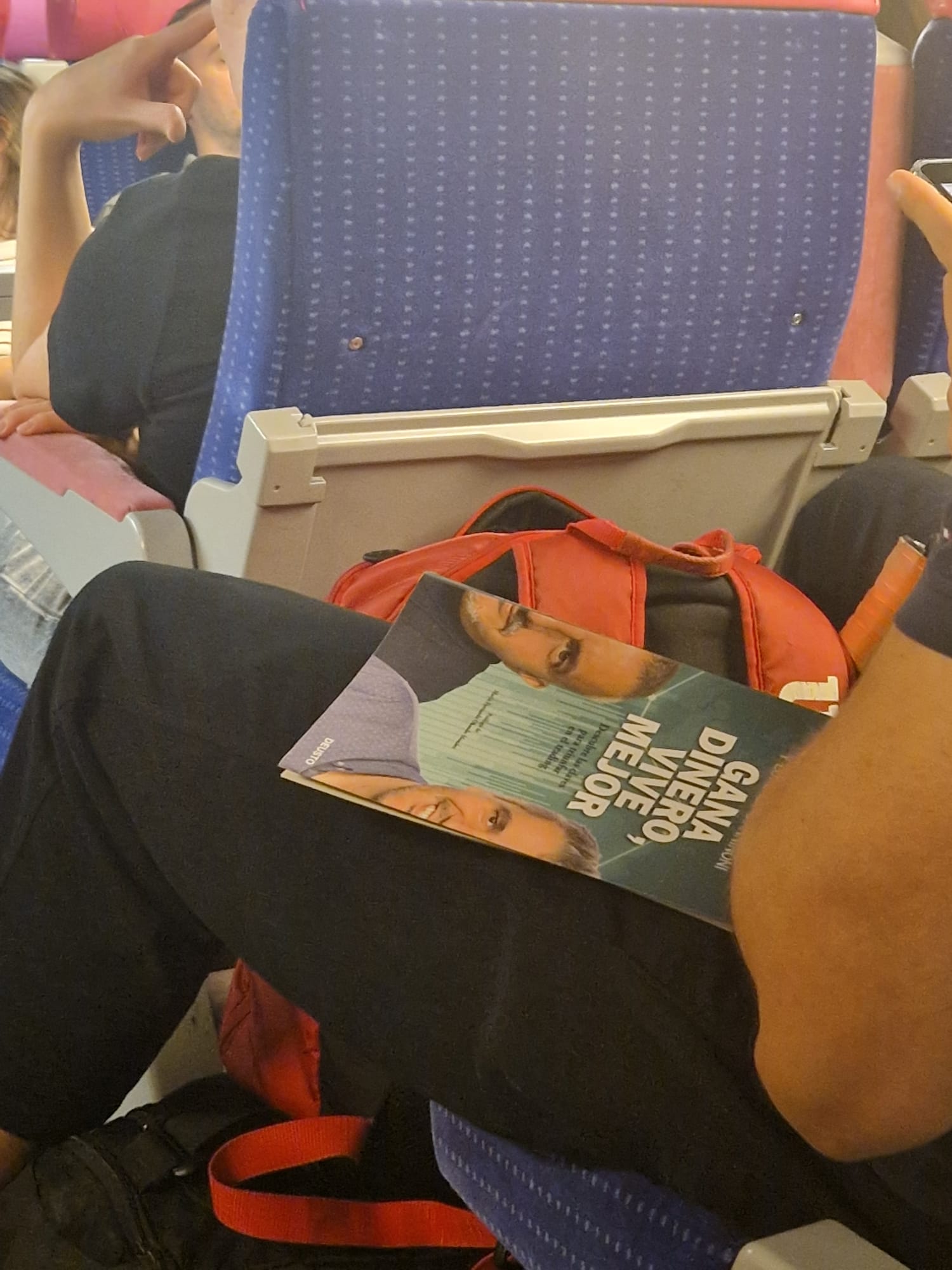
En una mesa frente a mí, en la cafetería, hay un hombre que viste una camiseta con esta frase escrita en el pecho: “La revolución empieza leyendo”. Está leyendo, quizá porque cada vez que se pone la camiseta se siente obligado a leer, o porque usar la camiseta le da más fuerza para continuar la lectura, o porque, una vez que lee, rentabiliza así un poco más su esfuerzo.
Qué gran responsabilidad elegir el libro que uno va a leer cuando se adorna con una camiseta como esa –¿qué libro será el que pueda iniciar la revolución?, ¿qué revolución?–. Hace unos años subí al segundo piso de una cafetería en Tottenham Court Road en Londres y encontré a unos sesenta jóvenes cada uno con un ejemplar de la nueva entrega de Harry Potter, que se vendía por primera vez esa mañana en la librería de al lado. Caminé perplejo a través de un relato de ciencia ficción, porque leían con el libro en alto, mostraban ostensiblemente la portada, como coreografiados. Si alguno llevaba esa camiseta, el libro la ocultaba. Quizá alguna revolución empezó ahí. Eso es incierto.
El hombre de la camiseta se ha reunido ahora con su familia, que acaba de llegar a su mesa, y ya no lee. Yo le miro de vez en cuando, pero la mayor parte del tiempo soy yo el que está leyendo. En este momento me gustaría llevar una camiseta que dijera: “¡La revolución empieza leyendo, no comprando camisetas, listo!”, pero por supuesto que eso no serviría de nada. Hay que refrenar esos impulsos.
Me encuentro con conocidos del pasado, compañeros de colegio quizá que, llegados a una edad, cuando ya han alcanzado la estabilidad económica, sus hijos han crecido y viven fuera de casa, y una vez que trabajar intensamente ha perdido aquél sentido que les animaba, han caído en cuenta de todo el tiempo que han estado absorbidos en esas ocupaciones, sin realizarse. Ahora reclaman dedicación a sí mismos, quieren leer, disfrutar con los libros como lo hacían en la juventud –“perder el tiempo”–. Se enfrentan a esa noble tarea en las librerías y adquieren las novelitas de adolescentes que dejaron a medio leer cuando se convirtieron en personas responsables.
Leer puede ser bueno, no lo niego, pero depende del libro que leas. Los hay muy buenos. Hay anuncios de televisión que son muy buenos, dice la gente, llenos de imaginación y creatividad, auténticas obras de arte, dice la gente. Quizá. Como si hubiera que ver trescientas veces seguidas la misma película de superhéroes para poder asistir a una proyección de, por ejemplo, Fanny y Alexander. Hay muchos libros cuya lectura es peor para el espíritu, incluso, que mirar algo en Netflix. Hay libros que hacen mucho daño, a los que los leen y a los que los escriben, por lo menos como a la mitad de unos y de otros, más o menos. Los Padres de la Iglesia llevan siglos diciéndolo (no debían referirse a los mismos libros, o quizá sí).
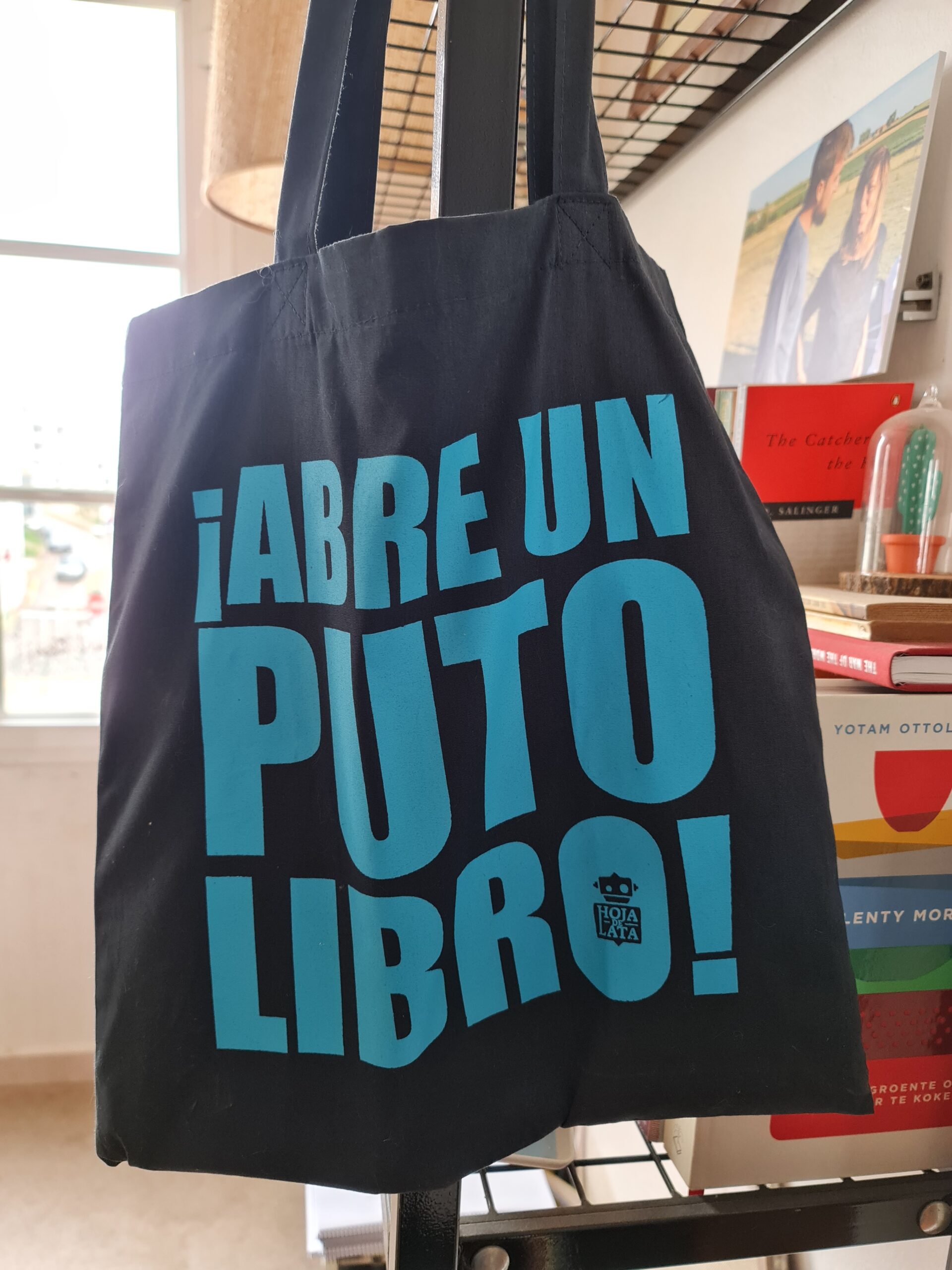
Veo una chica por la calle que lleva una bolsa de tela decorada con un imperativo: “abre un puto libro”. Hasta quienes abrazan la cultura prefieren ser malotes y les resulta divertido combinar consignas humanistas con palabras soeces, smartand witty. Parecen invitar a leer libros malos, esos dañinos, esos “libros putos”. Un consejo con vocación moral admirable cuya arrogancia ha sido provocada, en el mejor de los casos, por el pudor que les produciría ser, simplemente, buena gente que quiere lo mejor para sus congéneres. Además de que no es suficiente con solo abrirlos, ¿por qué no una bolsa que simplemente diga “lee un buen libro”?
Una moral mínima diría: “En un mundo en el que hace tiempo que los libros no parecen libros, sólo valen como tales los que no lo son”. La mayor parte de los libros son narcóticos. No son estupefacientes de tanta potencia como casi cualquier serie de televisión pero de todas formas su intención y efecto es adormilar. Si las series o los deportes son para aquellos que quieren dormir a pierna suelta, esos libros son prescritos para la sedación de quienes quieren sentirse despiertos. También hay otros anfetamínicos. Los que curan son muy pocos y el procedimiento por el que te curan, además, consiste en enfermarte un poco más.
Sospecho del elogio generalizado a la lectura, a la lectura en general. De entre todos los libros odiosos, los más odiosos son lo que defienden indiscriminadamente los libros, las plañideras de la desaparición del libro. Sus elogios y denuncias parten del lugar común que soñó Orwell, libros quemados por esvásticas -véase ejemplarmente, Fahrenheit 451-, pero su actitud precipita el apocalipsis que pronosticó Huxley, un mundo inundado por el número suficiente de libros como para que los libros queden ocultos. En el mundo de Orwell no hay sitio para Huxley, pero en el de Huxley, hasta la peor pesadilla de Orwell es bien recibida.
Los libros que vale la pena leer son aquellos que tienen en la portada la frase: “Lo siento, pero este libro no es para ti.”
Celsius 233
At a table in front of me, in the coffee shop, there is a man wearing a T-shirt with this phrase written on the chest: ‘The revolution begins by reading’. He is reading, perhaps because every time he puts on the T-shirt he feels obliged to read, or because wearing the T-shirt gives him more strength to continue reading, or because, once he is reading, this makes his effort a little more profitable.
What a great responsibility to choose the book one is going to read when one is adorned with a T-shirt like that – what book will be the one that can start the revolution, what revolution? A few years ago I went up to the first floor of a coffee shop on Tottenham Court Road in London and found about sixty young people each with a copy of the new Harry Potter release, which was being sold for the first time that morning in the bookshop next door. I walked perplexed through a science fiction story, because they were reading with the book held high, ostensibly displaying the cover, as if choreographed. If anyone was wearing that T-shirt, the book hid it. Maybe some revolution started there. That is uncertain.
The man in the T-shirt has now joined his family, who have just arrived at his table, and no longer reads. I look at him from time to time, but most of the time it is me who is reading. Right now I would like to wear a T-shirt that says: ‘the revolution starts with reading, not buying T-shirts, smart alec!’, but of course that would do no good. Those impulses have to be restrained.
I meet acquaintances from the past, schoolmates perhaps who, at a certain age, when they have reached economic stability, their children have grown up and live away from home, and once working intensely has lost the meaning that encouraged them, they have realised how much time they have been absorbed in these occupations, without achieving anything. Now they demand dedication to themselves, they want to read, to enjoy books as they did in their youth – ‘to waste time’-. They take on this noble task in bookshops and buy the little teenage novels that they left half-read when they became responsible people.
Reading can be good, I don’t deny it, but it depends on the book you read. There are some very good ones. There are TV commercials that are very good, people say, full of imagination and creativity, real works of art, people say. Maybe they are. As if you had to watch the same superhero movie three hundred times in a row to be able to attend a screening of, say, Fanny and Alexander. There are many books whose reading is worse for the spirit, even, than watching something on Netflix. There are books that do a lot of harm, to those who read them and to those who write them, at least to about half of both, more or less. The Fathers of the Church have been saying this for centuries (they must not have been referring to the same books, or maybe they were).
I see a girl in the street carrying a tote bag decorated with an imperative: ‘open a fucking book’. Even those who embrace culture prefer to be badass and find amusing to combine humanist slogans with swear words. They seem to invite to read bad books, those harmful ones, those ‘fucking books’. An admirably moral advice whose arrogance has been provoked, at best, by the embarrassment of simply being good people who want the best for their fellow human beings. Besides that to open them is not enough, why not a bag that simply says ‘read a good book’?
A minimal morality would say: ‘In a world where books have long lost all likeness to books, the real book can no longer be one’. Most books are narcotic. They are not as potent narcotics as almost any television series, but their intention and effect are to lull you to sleep. If series or sports are for those who want to sleep soundly, these books are prescribed for the sedation of those who want to feel awake. There are also other amphetaminic. The ones that cure are very few and the procedure by which they cure you, moreover, consists of making you a little sicker.
I am suspicious of the widespread praise for reading, for reading in general. Of all the hateful books, the most hateful are those who indiscriminately defend books, the mourners of the disappearance of the book. Their praise and denunciations start from the commonplace that Orwell dreamt of, books burned by swastikas – see, exemplarily, Fahrenheit 451– but their attitude precipitates the apocalypse that Huxley predicted, a world flooded by enough books that books are hidden. In Orwell’s world there is no place for Huxley, but in Huxley’s, even Orwell’s worst nightmare is welcome.
The books worth reading are those that have on the cover the sentence: ‘I’m sorry, but this book is not for you’.
«El dilema estético que surge inmediatamente post-Auschwitz (¿qué tipo de objeto, si alguno, mere»ce crearse ante un irrepresentable?, que es la pregunta de Adorno) se expande para albergar este otro: ¿qué tipo de objeto merece crearse, si alguno, en medio de esta aniquilación de la memoria a manos del museo y del periodismo? La respuesta es afirmativa (sí merece crearse) y es simple: un objeto que trate de olvidar que no ocurrió nada. Ya no el objeto que trata de recordar algo, porque eso termina siendo el lado peor de la nostalgia, sino el objeto que trabaja contra el olvido organizado». Mario Montalbetti.
En los años ochenta no hacía falta mucho para vivir, si eras joven, si eras artista, no hacía falta mucho para ser joven y artista; ni portátil, ni tarifa plana, ni conexión a internet, ni teléfono móvil, ni aplicaciones, ni programas de diseño.
Nosotros éramos jóvenes, también. Aun así, ni nos seducía el maquillaje, ni los tacones de plataforma, ni la moda juvenil, ni las drogas recreativas, ni la vanguardia-es-el-mercado, ni la promiscuidad sexual ni las luces de discoteca. Nada fácil, en aquel tiempo, nada común. A pesar de ello, tampoco ensalzábamos con tono solemne la libertad proclamada en tribunas presidenciales, o en manifestaciones callejeras, ni nos satisficieron las dádivas democráticas que el Estado repartía generosamente por aquel entonces, tras haberlas atesorado muchos años, las luchas obreras no nos adularon, ni los ajustes salariales. Eso tampoco era lo habitual.
Juan Hidalgo, que pasó en ocasiones a visitarnos, había creado una tarjeta años antes en la que estaba escrito “Si usted y yo quisiésemos ir a la luna, ¿cuál sería la primera cosa que tendríamos que hacer?”. He pensado en esta frase cada vez que he ido a la Luna. No hay nada que esperar, ni una llamada de la Agencia Espacial, ni un software que calcule la trayectoria, los pesos y las energías, ni una beca, ni un dorsal. Ni siquiera ese compañero que tire de ti, ese cómplice al que preguntar, porque, a decir verdad, todas estas misiones espaciales son bastante solitarias. Hay una manera de ir a la Luna y está al alcance de cualquiera que haga lo primero que haya que hacer, y después lo segundo, y después lo tercero, hasta que, en una de esas, levante la mirada y se sorprenda al ver allí lejos, pequeñito, el maldito planeta azul. Hay una manera de preguntarse qué es lo primero que tendría uno que hacer.
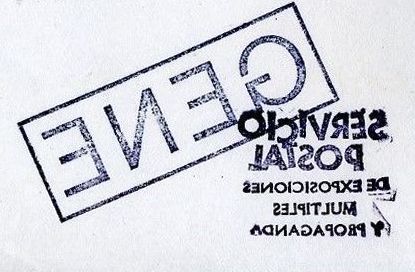
Una mañana de 1986 empecé el Servicio Postal de Exposiciones Múltiples y Propaganda. Se me ocurrió una idea y, en mi ingenuidad, pensé que tenía que ser dicha, que tenía que ser oída. El procedimiento era sencillo: se dibujaba, o se ponía por escrito, se hacían tantas copias como personas conocieras que pudieran agradecer recibir tal cosa, por cariño o sintonía, y se introducía cada copia en un sobre. Se llevaban los sobres a correos. Envío número uno.
Cuando habían sido ya enviadas unas cuantas ideíllas, mías y de amigos y colegas, conocí a los demás miembros de GENE, el grupo que sería, a partir de ahí y durante dos años. El Servicio Postal se convirtió en un órgano de ese cuerpo, y la actividad se multiplicó por diez, la intensidad, la sangre bombeada.
GENE era un grupo de acción política, pero sólo en cuanto que todo aquello que pudiera ser ensalzado -en la política nacional, en la deriva que iban tomando las instituciones culturales españolas, en el mundo del pensamiento y del arte en general-, era sistemáticamente puesto en duda y, a poco que aún levantara la cabeza, objetivo de nuestras mofas y descalificaciones. Era una cuña de oposición artística, una revolución con la cara A iluminada por la utopía.
El proyecto no podía ser sino un éxito, no podía ser sino un fracaso. Contábamos con dos ventajas inconvenientes: que a nadie le importaba lo que hacíamos, y que lo que hacíamos no era útil para que nadie se sintiera importante. Por un lado, nos dejaban en paz por inofensivos -demasiado anarquistas para dar ningún miedo-, por el otro, todavía eran nuestros esos medios que ahora, a poca capacidad de llamar la atención que tengan, han sido usurpados por empresas de mercadotecnia, se han convertido en propiedad desleal de youtubers e instagramers, de influecers, territorios de flash mobs y stealth advertising. Entre todos han dejado exhaustas las fuentes y las desembocaduras. Ahora nuestros envíos irían a la carpeta de spam. Cuando esas condiciones desaparecieron y la ausencia dio sus frutos, otras condiciones más infelices, el grupo también se desvaneció.
Son dos los fenómenos por los que las ideas, actitudes, protestas, reflexiones, críticas y alabanzas pasan de moda y se vuelven obsoletas: puede que los problemas que las causan sean resueltos y vuelvan banales todos los preliminares y puede que esos problemas se vuelvan invisibles, se asuman como parte esencial de la vida -alienación necesaria-. Aquello que antes denunciaba la alienación ha pasado a cuestionar la vida, y todo lo que pone en duda el sentido de la vida, a la vida le parece absurdo.
Si GENE era ya absurdo entonces, ahora podría serlo todavía más, las cosas no han mejorado. Es cierto que una vez que uno se aleja de ese despertar al mundo y pierde la fuerza y la ilusión que resultan de la inconsciencia y la inconsistencia, se encuentra de frente con un dispositivo bien tramado para enredarte; se aceptan golosinas y se acusa recibo de las amenazas que la sociedad va dejando esparcidas por ahí, como si no fueran para ti, pero bien a la vista -la vida profesional compra el absurdo al por mayor y luego lo administra-. Si se ha sido sincero, sin embargo, llegado un momento se vuelve a recuperar aquella misma simplicidad. Ahora he desaprendido lo suficiente como para poder despertarme muchas mañanas tarareando tonadillas que compusimos todos juntos durante esos dos años. Todavía nada que perder y ya nada que perder.
Hay una exposición sobre GENE en la biblioteca del Reina Sofía. Es bonito pasear la mirada por tantas consignas disparatadas, tanta emoción y entusiasmo que fueron derrochados en esos papeles -en ese sentido en el que Bataille es mejor evocado-. Pero también es triste, sobre todo triste. Sí, claro, porque ya no somos jóvenes, he perdido el pelo, me duelen las rodillas y han muerto muchos -¡la muerte ha deshecho a tantos!-. Es triste, especialmente, porque dentro de esas vitrinas ferétricas, mausoléicas, ataúdicas y sarcofáguicas los objetos, desconcertados, preguntan “¿por qué nos habéis traído aquí?” Ahí han dejado de ser absurdos. Las cartelas están todas bien redactadas. No queda nada que decir.
Por lo menos, para algunos, todavía lo mejor de la vida es Ruiz.
SPEMP
In the eighties you didn’t need much to live, if you were young, if you were an artist, you didn’t need much to be young and an artist; no laptop, no flat rate, no internet connection, no mobile phone, no applications, no design programmes.
We were young, too. Even so, we weren’t seduced by make-up, or platform heels, or youth fashion, or recreational drugs, or the avant-garde-is-the-market, or sexual promiscuity or disco lights. Nothing easy, at that time, nothing common. Despite this, we didn’t either praise with a solemn tone the freedom proclaimed in presidential tribunes, or in street demonstrations, nor were we satisfied with the democratic gifts that the state handed out generously at that time, after having hoarded them for many years, the workers’ struggles didn’t flatter us, nor the wage adjustments. That was not the norm either.
Juan Hidalgo, who came to visit us on occasion, had created a card years before on which was written ‘If you and I wanted to go to the moon, what would be the first thing we would have to do? I have thought of this phrase every time I have gone to the moon. There is nothing to look forward to, no call from the space agency, no software to calculate trajectory, weights and energies, no scholarship, no bib number. Not even that partner to pull you along, that accomplice to ask because, to tell the truth, all these space missions are pretty lonely. There is a way to go to the Moon, and it is within the reach of anyone who does the first thing that needs to be done, and then the second, and then the third, until, one of those times, he looks up and is surprised to see the damn blue planet there, tiny, tiny. There is a way of wondering what one should do first.
One morning in 1986 I started the Multiples Exhibitions and Propaganda Postal Service. An idea occurred to me and, in my naivety, I thought it had to be said, it had to be heard. The procedure was simple: draw it, or put it in writing, make as many copies as you knew of people who might be grateful to receive such a thing, out of affection or sympathy, and put each copy in an envelope. The envelopes were taken to the post office. Shipment number one.
By the time a few ideas had been sent out, mine and those of friends and colleagues, I met the other members of GENE, the group that was to be, from then on for two years. The Postal Service became an organ of that body, and the activity increased tenfold, the intensity, the blood pumped.
GENE was a political action group, but only insofar as anything that could be praised – in national politics, in the direction Spanish cultural institutions were taking, in the world of thought and art in general – was systematically called into question and, if it still raised its head, the target of our ridicule and despise. It was a wedge of artistic opposition, a revolution with its A side illuminated by utopia.
The project could only be a success, it could only be a failure. We had two inconvenient advantages: that nobody cared about what we were doing, and that what we were doing was not useful to make anybody feel important. On the one hand, we were left alone as inoffensive – too anarchist to be scary -, on the other hand, we still owned those media that now, as soon as they have the capacity to attract attention, have been usurped by marketing companies, have become the unfair property of youtubers and instagramers, of influencers, territories of flash mobs and stealth advertising. Between all of them, they have left the sources and mouths of the rivers exhausted. Now our submissions would go to the spam folder. When those conditions disappeared and the absence bore fruit to other, unhappier conditions, the group vanished too.
There are two phenomena by which ideas, attitudes, protests, reflections, criticisms and praises go out of fashion and become obsolete: maybe the problems that cause them are solved and make all the preliminaries banal, and maybe those problems become invisible, are assumed as an essential part of life -necessary alienation-. What used to denounce alienation has become a questioning of life, and everything that questions the meaning of life seems absurd to life.
If GENE was already absurd then, it could be even more so now, things have not improved. It’s true that once you move away from that awakening to the world and lose the strength and illusion that come from unconsciousness and inconsistency, you find yourself face to face with a well-contrived device to entangle you; you accept treats and acknowledge receipt of the threats that society leaves scattered around, as if they weren’t meant for you, but well in sight – professional life buys absurdity wholesale and then administers it. If you have been honest, however, at a certain point you get back to that same simplicity. I have now unlearned enough to be able to wake up many mornings humming tunes that we all composed together during those two years. Still nothing to lose and nothing left to lose.
There is an exhibition about GENE in the Reina Sofía library. It’s nice to look at so many crazy slogans, so much emotion and enthusiasm wasted on those papers – in that sense in which Bataille is best evoked. But it is also sad, especially sad. Yes, of course, because we are no longer young, I have lost my hair, my knees hurt and many have died – death has undone so many!. It is sad, especially because inside these casketish, mausoleic, coffinish and sarcophagic display cases, the objects, bewildered, are asking ‘why have you brought us here?’ There they have ceased to be absurd. The labels are all well written. There is nothing left to say.
For some, at least, the best of life is still Ruiz.
Creo que la Tierra es plana. No lo digo con convicción, pero sí con entusiasmo.
La mayor parte de la población piensa que los terraplanistas somos tontos, retrógrados, ridículos. La ciencia, el simple sentido común, demuestra claramente que todo aquello en lo que creemos es falso.
Durante mucho tiempo estaba convencido de que los teraplanistas eran agentes infiltrados de la doxa, enemigos creados artificialmente para que la ciencia pudiera demostrar lo lista y lo buena que es, para que pudiera exhibir todas sus verdades incluso cuando nunca nadie se lo hubiera pedido. Para mí los terraplanistas eran como los flower power que se introducían en las manifestaciones y se mezclaban con los black panthers con el propósito de que pareciera que lo que reivindicaban estos últimos era “haz el amor y no la guerra”.
Quizá en el pasado uno se hacía terraplanista porque pensaba que la Tierra era, de hecho, plana. En la actualidad, sin embargo, parece que lo que la mayor parte está buscando es el sentido de pertenencia a un grupo que el terraplanismo procura – una comunidad mucho más unida que la del simple sentido común-. También, defender que la Tierra es plana llama más la atención, y se consiguen más likes, y se puede ir a congresos, en lugares exóticos -los mismos criterios por los que otros siguen al Manchester United-.
Ahora he pasado a ser uno de ellos, pero no son esos los motivos que me animan. Aunque yo no me sienta especialmente terraplanista eso no importa, porque gran parte de la gente con la que hablo diariamente cree que lo soy. La clave que resuelve esta paradoja es que todos los disidentes nos hemos asimilado y da igual que uno crea que con las vacunas te inoculan chips 5G, que no ha habido ningún ser humano jamás en la Luna, que la estela de los aviones envenena a la población, que ellos te manipulan el cerebro mediante ondas electromagnéticas, que la democracia es injusta, o que el arte actual es un fraude de la sociedad para la sociedad: el papel que te hacen representar en sociedad es el mismo en cualquiera de los casos. Es desagradable representar este papel, tener que defender públicamente que la Tierra es plana -que nadie imagine que me gusta-, pero de todas formas lo hago con resignación, con auténtico entusiasmo, si la alternativa es alabar la ciencia, el progreso, la libertad, y las aplicaciones de mensajería instantánea. Mejor ser terraplanista con estos, que sensato con los otros.
Cuentan en televisión con orgullo humanista que en M.I.T., ese laboratorio de nuevas formas de imperialismo tecnológico, han creado un chatbot para discutir online con chiflados que creemos en estas cosas. Esta inteligencia artificial utiliza las fórmulas verbales más ajustadas, sin que la pasión empañe sus argumentos, sin perder ese objetivo que persigue: anular toda posibilidad de contestar. El público aplaude que existan estos mecanismos de sentido común, que acabarán con esos y poco a poco con otros chiflados, los que dicen que Elon Musk es un psicópata o que los sueldos son bajos, por ejemplo, acabaran definitivamente con las teorías conspirativas. Pero, ¿qué chiflado decide qué es una conspiración y qué no?
Vale. No creo que la Tierra sea plana. Pero eso de que la velocidad de la luz es constante, por eso sí que no paso.
Statements with a tinfoil hat
I believe the Earth is flat. I don’t say it with conviction, but I say it with enthusiasm.
Most of the population thinks that we terraplanists are silly, backward, ridiculous. Science, simple common sense, clearly shows that everything we believe in is false.
For a long time I was convinced that the terraplanners were infiltrated agents of doxa, artificially created enemies so that science could show how clever and how good it is, so that it could display all its truths even when no one had ever asked it to. To me the terraplanners were like the flower power people who would sneak into demonstrations and mingle with the black panthers in order to make it look as if the latter’s claim was ‘make love not war’.
Perhaps in the past one became a terraplanist because one thought that the Earth was, in fact, flat. Nowadays, however, it seems that most people are looking for the sense of belonging to a group that terraplanism provides – much stronger community than that of just common sense. Also, advocating that the Earth is flat gets more attention, and you achieve more likes, and you can go to conferences, in exotic places – the same criteria by which others follow Manchester United.
Now I’ve become one of them, but those are not the reasons that encourage me. Although I don’t feel particularly terra-planning myself, it doesn’t matter, because most of the people I talk to on a daily basis believe I am. The key that resolves this paradox is that all of us dissidents have assimilated and it doesn’t matter if one believes that vaccines inoculate you with 5G chips, that there has never been a human being on the Moon, that the wake of aeroplanes poisons the population, that they are manipulating one’s brain by electromagnetic waves, that democracy is unjust, or that current art is a fraud of society for society: the role they make you play in society is the same in any of the cases. It is unpleasant to play this role, to have to defend publicly that the Earth is flat – let no one imagine that I like it – but I do it with resignation anyway, with genuine enthusiasm, if the alternative is to praise science, progress, freedom, and instant messaging applications. Better to be a terra-planner with these than sensible with the others.
They tell on television with humanist pride that at M.I.T., that laboratory of new forms of technological imperialism, they have created a chatbot to discuss online with crackpots who believe in these things. This artificial intelligence uses the most appropriate verbal formulas, without passion tarnishing its arguments, without losing the objective it pursues: to nullify any possibility of replying. The public applauds the existence of these common sense mechanisms, which will put an end to these and little by little other crackpots, those who say that Elon Musk is a psychopath or that salaries are low, for example, will definitively put an end to all conspiracy theories. But what crackpot decides what is a conspiracy and what isn’t?
All right, I don’t believe that the Earth is flat. But that the speed of light is constant, man, that’s something I really don’t buy.
Hacía frío en Islington, en el invierno de 2006. Yo tenía calefacción de gas y recibí una carta que me recordaba la obligatoriedad de pasar la revisión de seguridad. Hacía tiempo que no había venido nadie a comprobar la instalación. Llamé por teléfono a la empresa que aconsejaba el ayuntamiento. Tenía la experiencia de que cada vez que venía alguien a hacer alguna reparación en el piso tenía problemas, por chapucería de los operarios, por la inquietud que me producía el que el visitante estuviera registrando los objetos de valor o, como este caso que voy a contar, porque aparecieran de forma inesperada normativas que yo no conocía o nuevas tareas y obligaciones. Esta vez vino un técnico, comprobó si había fugas y encontró que todo estaba bien. Sin embargo, una nueva ley para este tipo de calefacción de gas, obligaba a tener «ventilación directa» en la casa, lo que significaba simplemente que debería haber un agujero en la pared. El técnico dijo que, al no tener esta ventilación, se veía obligado a sellar el gas. En pleno invierno, sin aviso, me dejaban sin calefacción hasta que solucionara este problema. Le supliqué, le prometí que lo haría inmediatamente, que dejaría una ventana abierta todo el tiempo… Se compadeció de mí y, aunque no muy convencido, dejó el gas funcionando. Me hizo prometer que no abriría la puerta a nadie hasta que solucionara el problema porque él estaba obligado a informar del incidente y los inspectores del ayuntamiento podían estar allí enseguida para comprobar que había hecho bien su trabajo. Si cuando llegaran el gas no estuviera sellado, o el agujero en la pared todavía no existiera, él tendría problemas.
Se marchó y me puse inmediatamente a buscar en las páginas amarillas a alguien que hiciera el trabajo. El procedimiento normal, según pude entender, es hacer un agujero en el cristal de una de las ventanas, e instalar un trozo de plástico que haga circular el aire. Encontré una compañía de gas con servicio 24 horas y esperé a que vinieran. Acordamos que llamarían por teléfono cuando estuvieran delante del edificio, para no abrir a los inspectores del ayuntamiento por equivocación.
En una hora más o menos llamaron al timbre y abrí la puerta. El operario no llevaba ropa de trabajo, ni caja de herramientas. Solo traía en la mano un cortavidrios y la pieza de plástico. Le enseñé la ventana. Me dijo que él cortaría un círculo en el cristal, pondría la pieza y serían cuarenta libras. Bastante dinero, pensé, pero era mejor quitarse el asunto de en medio cuanto antes. “De acuerdo, adelante”. También dijo que el cristal podría romperse, que normalmente no se rompía, pero que si se rompiera, ese no sería su problema. ¿Qué podía decir a eso? Únicamente, “de acuerdo, adelante” y cruzar los dedos. Mientras hacía la operación, un poco torpemente, yo le observaba en tensión, sufriendo por la integridad de mi ventana. Aunque lo intentó varias veces no conseguía un corte limpio, así que empezó a quitar pequeños trozos de cristal a golpecitos. El cristal caía a la calle y cuando se lo advertí pidió una toalla y la puso fuera, en el alfeizar, pero aun así el cristal seguía cayendo. Yo sólo quería que terminara y se fuera.
De hecho, las piezas de cristal no habían caído en la calle, sino en el jardín de mis vecinos y cuando el operario se marchó con sus cuarenta libras, pensé en bajar a recoger los trozos caídos. En realidad habían sido muy pocas piezas y el jardín no merecía tal nombre: estaba lleno de basura, con una lavadora vieja, trozos de madera rotos, todo tipo de objetos de plástico. El jardín trasero estaba todavía peor, lleno de cosas podridas. Pensé que unos pocos trozos de cristal no tenían relevancia en ese paisaje.
Unos días después tuve que ir a España por un tiempo, y a mi regreso no salía mucho de casa y, ya que hacía frío, los vecinos no estaban nunca fuera, así que no me topé con ellos hasta que pasó al menos un mes. Pero un día estaba saliendo del edificio y la señora de la casa hablaba en la puerta con otra persona. Se interrumpió bruscamente y vino hacia mí gritando: “Tú, tú, tú, has llenado mi jardín de cristales. Has puesto a mi hija en peligro. Podría haberse cortado con los cristales. ¡No tienes decencia!”
En pleno invierno era muy improbable que su hija de un año jugara en el suelo del jardín entre la basura que tenían allí acumulada. Pero yo era culpable, así que me excusé como pude: pedí perdón repetidas veces, le pregunté que qué tipo de reparación quería, y me ofrecí a pagar un jardinero, haría lo que me pidiera. Pero ella dijo que así estaba bien. Ya había hecho uso de la oportunidad que se le había presentado, con esa demostración había equilibrado la cuenta, después de esperar todo el mes para ello se había podido relajar. Me disculpé un par de veces más y me fui.
Durante el tiempo que viví en Londres llegué a pensar que la característica más destacada de la vida allí era que no se desperdiciaba ninguna oportunidad: si en una cafetería se podía poner otra mesa, había que hacerlo, para sacarle rendimiento a ese espacio; si había un objeto en la calle desatendido -una bicicleta, por ejemplo-, había que llevárselo; si había algo por lo que se pudiera cobrar, se le ponía precio. Este era solo un caso más en el que había que sacar algún beneficio de eso que se te había puesto delante. Se podría pensar que esto es una forma en la que el capitalismo va transformando la vida cotidiana, y sin duda, la tradición de expansión imperial inglesa formó un tipo de carácter en la población, que fue luego exportado a Norteamérica, donde se perfeccionó –la oportunidad de tantas tierras desocupadas-, y finalmente distribuido desde allí al resto del planeta. Sí, pero el descubrimiento más importante para mí esos años fue ver cómo ese mecanismo funciona, en gran medida, por presión de pares: ya que todos lo hacen, uno también puede hacerlo, uno debe hacerlo porque aquellos que no se aprovechan son tratados de idiotas. Si uno no lo hace se siente ridículo. Porque era algo a lo que se había visto forzada, es por lo que mi vecina no llevó su ventaja hasta el límite. Por este motivo pienso que una de las maneras de resistencia al capitalismo, si no más eficaces desde luego más coherentes, es no hacer uso de ninguna de las oportunidades que se te ofrecen, tener el valor de hacer a menudo ese ridículo. Frontalmente en contra las costumbres locales de muchas culturas, esta actitud de rentabilizar tus activos es la invasión cultural más devastadora de todas las que estamos presenciando, la que puede acabar con la humanidad.
Ese día, después de la reprimenda, fui a Carluccio’s, una cadena de exquisiteces italiana, y compré una lujosa caja de chocolate. Volví a casa, entré en el jardín de los vecinos y llamé al timbre. Abrió el hijo mayor. Del apartamento salía un olor nauseabundo que en parte se debía a que dos gatos y un bulldog compartían la casa con la familia. Le pregunté por su madre. Cuando ella se asomó a la puerta le pedí, por favor, que aceptara los bombones como disculpa, como una muestra de mi pesar, y los disfrutara con su familia. Se quedó estupefacta. No podía entender por qué estaba yo teniendo ese gesto al que no estaba obligado de ninguna manera. Lo único que pudo hacer fue cruzar el umbral y abrazarme mientras lloraba. Ahora el sorprendido era yo. Fue muy triste pensar que alguien había experimentado en su vida tan pocas muestras de buena voluntad como para que esto le resultara tan conmovedor y extraordinario.
La familia no tardó mucho en mudarse a otro sitio. Después del episodio, nos sentíamos incómodos cada vez que nos cruzábamos.
A hole in the wall
It was cold in Islington in the winter of 2006. I had gas heating, and I received a letter reminding me I had to have a safety check. It had been a long time since anyone had come to check the installation. I phoned the company recommended by the local council. The experience I had was that every time someone came to do some repairs in the flat there were problems, because of the shoddiness of the workers, because I was worried that the visitor was exploring the valuables of the flat or, as in this case, because of the unexpected appearance of regulations that I didn’t know about or new tasks and obligations. This time a technician came, checked for leaks and found that everything was fine. However, a new law for this type of gas heating required to have ‘direct ventilation’ in the house, which simply meant that there should be a hole in the wall. The technician said that, not having this ventilation, he was forced to seal the gas. In the middle of winter, without warning, I was left without heating until this problem was solved. I begged him, I promised him that I would do it immediately, that I would leave a window open all the time…. He took pity on me and, although not very convinced, left the gas running. He made me promise not to open the door to anyone until I had fixed the problem because he was obliged to report the incident and the council inspectors could be there straight away to check that he had done his job properly. If when they arrived the gas was not sealed, or the hole in the wall did not yet exist, he would be in trouble.
He left and I immediately start looking in the Yellow Pages for someone to do the job. The normal procedure, as far as I could make out, is to cut a hole in the glass of one of the windows, and install there a piece of plastic to circulate the air. I found a gas company with 24-hour service and waited for them to come. We agreed that they would phone when they were in front of the building, so as not to open the door to the council inspectors by mistake.
Within an hour or so they rang the bell and I opened the door. The worker had no work clothes on, no toolbox. All he had in his hand was a glass cutter and a piece of plastic. I showed him the window. He told me that he would cut a circle in the glass, put the piece in and it would be forty pounds. Quite a lot of money, I thought, but it was better to get it out of the way as soon as possible. ‘All right, go ahead.’ He also said that the glass might break, that it didn’t normally break, but if it did, that wouldn’t be his problem. What could I say to that? Just, ‘all right, go ahead’ and cross my fingers. As he did the operation, a little awkwardly, I watched him in tension, suffering for the integrity of my window. Although he tried several times he couldn’t get a clean cut, so he began to tap out small pieces of glass. The glass was falling into the street, and when I warned him, he asked for a towel and put it outside on the window sill, but still the glass kept falling. I just wanted him to finish and go away.
In fact, the pieces of glass had fallen not in the street, but in my neighbours’ garden and when the workman left with his forty pounds, I thought I would go down and pick up the fallen pieces. Actually, there had been very few pieces and the garden didn’t deserve such a name: it was a plot full of rubbish, with an old washing machine, broken pieces of wood, all kinds of plastic objects. The back garden was even worse, covered the earth with forgetful rotten stuff. I thought that a few pieces of glass had no relevance in that landscape.
A few days later I had to go to Spain for a while, and on my return I didn’t leave the house much and, since it was cold, the neighbours were never outside, so I didn’t run into them for at least a month. But one day I was leaving the building and the lady of the house was talking to someone else at the door. She abruptly interrupted and came towards me shouting: ‘You, you, you, you have filled my garden with glass. You have put my daughter in danger. She could have cut herself with the glass. You have no decency!’
In the middle of winter it was highly unlikely that her one-year-old daughter would be playing on the garden floor among the rubbish they had piled up there. But I was guilty, so I excused myself as best I could: I apologised repeatedly, asked her what kind of repair she wanted, and offered to pay for a gardener, I would do whatever she asked. But she said that was fine. She had already made use of the opportunity she had been presented with, with that demonstration she had balanced the account, after waiting the whole month for it she could relax. I apologised a couple more times and left.
During the time I lived in London I came to think that the most salient feature of life there was that no opportunity was wasted: if you could put another table in a café, you had to do it, to make the most of the space; if there was an object in the street unattended – a bicycle, for example – you had to take it away; if there was something you could charge for, you had to put a price on it. This was just another case where you had to make some profit from what was put in front of you. You could think of this as a way in which capitalism is transforming everyday life, and certainly the tradition of English imperial expansion formed a kind of character in the population, which was then exported to North America, where it was perfected – the opportunity of so much unoccupied land – and finally distributed from there to the rest of the world. Yes, but the most important discovery for me in those years was to see how that mechanism works, to a large extent, by peer pressure: since everyone else is doing it, you can do it too, you must do it because those who don’t take advantage of it are treated as idiots. If you don’t do it, you feel ridiculous. Because it was something she had been forced to do that my neighbour did not push her advantage to the limit. And this is why I think that one of the ways of resisting capitalism, if not the most effective then certainly the most coherent, is not to make use of any of the opportunities offered to you, to have the courage to often make a fool of yourself. This attitude of profiting from your assets is the most devastating cultural invasion of all that we are witnessing, the one that can wipe out humanity.
That day, after the reprimand, I went to Carluccio’s, an Italian delicatessen chain, and bought a luxurious box of chocolate. I returned home, went into the neighbours’ garden and rang the doorbell. The eldest son answered. There was a foul smell coming from the flat, partly since two cats and a bulldog shared the house with the family. I asked for his mother. When she came to the door I asked her to please accept the chocolates as an apology, as a token of my regret, and enjoy them with her family. She was stunned. She could not understand why I was making this gesture to which I was in no way obliged. All she could do was cross the threshold and hug me while crying. Now, I was the surprised one. It was very sad to think that someone had experienced so little goodwill in her life that this could be so touching and extraordinary for her.
It didn’t take long for the family to move away. After the episode, we felt awkward whenever we passed each other.
Después de dos días en Viena conversando con otros artistas sobre el fenómeno de la voz en off y sus variantes, esta mañana he tomado el tren regional que conecta la Westbahnhof con Kirchstetten, un pueblo pequeño de la baja Austria en el que Wystan Hugh Auden pasó intermitentemente los quince últimos años de su vida y en su totalidad los, de momento, cincuenta de su muerte.
Una hora de viaje para la que he reservado la lectura de W.H. Auden: In the Autumn of the Age of Anxiety, una biografía del poeta escrita por Alan Levy como ampliación de un artículo que había publicado años antes en el New York Times. Cuando faltaban pocos días para volar a Viena me había entrado la urgencia por saber más de los últimos años de la vida de Auden, y había buscado el libro por las librerías en la red, resultando que en Viena se encontraba el ejemplar más conveniente, por precio y porque, al estar en esa ciudad, podría recibirlo a tiempo para la visita. Me estaba esperando en el hotel a la llegada. El ejemplar, por casualidad, está firmado por el propio Levy.
El libro empieza con el autor en el tren desde Viena a Kirchstetten, como yo, pero cincuenta y tres años antes y con la expectativa de encontrar a Auden esperándole en la estación con su Wolkswagen beetle, listo para recogerle y llevarle a casa, donde almorzarán y tendrán una conversación con suave vocación de entrevista.
Hace cuatro años encargué online otro libro, los aforismos de Josep Joubert, a un vendedor privado de Barcelona, un señor muy amable que escribía como si se comunicase conmigo desde los primeros años del siglo XX, con mucha cortesía y pomposidad. Parecía, también, muy despistado porque el paquete que recibí contenía El prolífico y el devorador, de W H Auden, publicado en la misma colección y con una portada muy parecida a la del solicitado. El vendedor, entre disculpas elaboradas me pidió que guardase el libro como regalo, mientras enviaba el de Joubert a continuación. Esa fue mi iniciación en el que, hasta entonces, había sido solo un poeta más para mí. ¡Qué maravilloso accidente fue este que me proporcionó en Auden un nuevo amigo y, en su retrato, un compañero para los que de Wittgenstein, Kierkegaard y Gide hay sobre mi chimenea!
Al llegar a Kirchstetten nadie está esperando en la estación. Tampoco se bajan más pasajeros del tren. Hay un silencio de apeadero de película del oeste. Solo al salir a la calle percibo la conversación de algunos clientes en la terraza de un bar pequeño al otro lado. De este pueblo nacido alrededor de la estación sale una carreterita casi recta hacia el sur, Bahnstrasse, que comunica a través de los campos de maíz con el pueblo original de Kirchstetten, donde Auden tenía su residencia, donde todavía reside. La calle señala ese grupo de casas sobre el que destaca la torre de la iglesia, en la cima de una colina.
Es un día radiante de principio de septiembre, con el cielo despejado pero sin el calor agobiante de agosto. Empiezo a caminar por el sendero junto a la carretera. A los lados, ocasionalmente, hay árboles cargados de fruta que no han sido cosechados, y manzanas y ciruelas están extendidas alrededor en un círculo amplio, aplastadas por los coches y los pocos caminantes, medio podridas, más densa la acumulación cuanto más cerca del tronco.
Voy escuchando en los auriculares una selección de poemas leídos por Auden mismo. No entiendo más que fragmentos, a causa de la pronunciación, del vocabulario, de lo complejo de las construcciones. Incluso en las traducciones en castellano me resulta difícil la poesía, y la de Auden. Sin embargo, es una banda sonora apropiada, si no por el contenido, sin duda por la textura sonora, una voz en off autorizada.
He leído su poesía por puro entusiasmo, forzándome a ello, siempre con esfuerzo. Las alegrías que he tenido en estos años con Auden se han desencadenado siempre tras encontrarme con sus apreciaciones sobre arte, cultura y política, y con comentarios y anécdotas de su vida, siempre de lo más humilde, de lo más compasivas y, en lo que al arte se refiere, también inflexibles. Algo parecido me sucede con Ludwig Wittgenstein: la dificultad que tengo para su filosofía solo puede ser compensada por la total entrega a sus otros escritos y anécdotas personales.
La voz de Auden empieza a recitar Deaths’s Echo unos veinte minutos después de que he salido de Kirchstetten, en el momento que llego a este otro pueblo, que se llama igual y que tiene también en su límite un letrero con su nombre, similar al que sobrepasé hace un rato, solo que este no está cruzado por una línea roja. Como si el término municipal de Kirchstetten se extendiera por todo el planeta con excepción de esos cuatrocientos metros de campos de maíz a punto de ser recolectados. También hay un cartel que dirige hacia la casa de Auden, y otro a la de Josef Weinheber, poeta así mismo, natural del lugar, que se suicidó al final de la segunda guerra mundial cuando se acercaba el Ejército Rojo a la localidad. Los dos poetas tienen en el pueblo su respectiva casa museo.
Las indicaciones guían al visitante invitándole a rodear la colina, la iglesia. Hay casas a los dos lados del camino, en medio de jardines limpios y ordenados que se pueden ver tras empalizadas de madera bajas. La decoración y el diseño son un poco torpes y dan una impresión artificial, muy distinta de la que uno tiene cuando pasea por lugares igual de anónimos en zonas residenciales anónimas en Japón. Todos los jardines tienen algún árbol frutal no cosechado, atentando contra la pulcritud del conjunto.
La casa de Auden está en el barrio de Hinterholz (lugar apartado), al otro lado de una autopista que hay que cruzar por debajo, a través de un túnel estrecho. Lo conocía de una grabación de la televisión austríaca del año 1967, cuando fueron a entrevistarle para su sesenta cumpleaños. Unos metros más allá de la salida está la Audenstrasse, que ya se llamaba así cuando el poeta vivía allí.
En Audenstrasse hay otros tres edificios. Me pregunto que significará el nombre de la calle para quienes viven en estas casas. Al final del recorrido, a la izquierda, se reconoce la estructura que he visto en documentales, las ventanas verdes tras las que el poeta trabaja en imágenes cinematográficas de la época, captadas desde fuera. En el balcón hay una reproducción fotográfica a tamaño real de Auden, tomada en ese mismo lugar, de forma tal que el poeta parece estar apoyado en la barandilla, pero en blanco y negro. Encuentro que el edificio es más grande de lo que hacen pensar los documentales. Lo veo también a través de la empalizada, ya que para visitar el interior es necesaria una reserva que no quise hacer porque me hubiera obligado a compartir este momento con el guía o vigilante. En la empalizada, bajo un buzón de correos americano, hay dos placas de bronce pequeñas: W. H. Auden y Chester Kallman.
Detrás de la casa se ven los paneles acústicos que protegen a este lado de la autopista del ruido de los coches y que cumplen su función solo parcialmente. La autopista ya existía en aquellos tiempos, pero puede que para Auden y Kallman el rumor del tráfico fuera solo un recuerdo de que Nueva York todavía existía más allá.
La calle acaba en un camino sin asfaltar que se adentra en un bosque de robles y carpes. Por el camino he visto abetos, pinos y trepadora de Virginia, una planta que se extiende con rapidez donde cae. Una vegetación muy parecida a la que encuentro en los alrededores de mi casa en la sierra, a una hora de tren de Madrid. Hace siete años que vivo allí, y se me ocurre en el paseo que puede que cuando me mudé estuviera buscando un retiro parecido a este, años antes de que Auden me hiciera compañía: un lugar tranquilo, separado, en un pueblo cuyo nombre hasta entonces no significaba nada y alrededor del cual una realidad urgente se genera, in the middle of somewhere. Esperar allí la muerte, siempre con trabajo pendiente, con algunas cosas que escribir y repasar. Ser enterrado después a unos trescientos metros de la vivienda.
Tres clases de personas: tres vías de salvación. Aquellos que buscan
A través de la manipulación de las cosas no humanas: el granjero, el ingeniero, el científico
A través de la manipulación de otros seres humanos: el político, el profesor, el médico;
A través de la manipulación de sus propias fantasías: el artista, el santo.
Se puede decir que Auden murió muy joven, a los sesenta y seis años, la misma edad a la que murió mi padre. Auden vivió exactamente siete meses más que él. A mí me faltan todavía tres para alcanzar esa edad ahora, en el momento en el que emprendo el camino hacia el cementerio del pueblo. Not to be born is the best for men, oigo entonces por los auriculares. He quedado allí con Robert, un amigo que viene en coche desde los Alpes, donde vive. “La cita es a las doce en la tumba de Auden” es una frase que, en esta tierra tan cercana al escenario de El tercer hombre, parece extraída de alguna novela de Graham Greene. Llego con tiempo para pasear con calma y estar un rato solo frente a la tumba. Pero tras dar unas cuantas vueltas por entre las lápidas no consigo encontrar la suya. Comparo cada rincón del cementerio con las imágenes que hay en Internet, y no coinciden. Finalmente resulta estar en un pequeño recinto junto a la iglesia, separado del cementerio principal. Abetos crecen en la tumba. Hasta que llega mi amigo, no hay nadie en los alrededores.
Aunque los edificios todavía existen, las dos tabernas a las que solía acudir Auden ya cerraron. Robert ha encontrado una casa de comida en un pueblo cercano que probablemente Auden visitó en más de una ocasión. Comemos un schnitzel vienés en el jardín, bajo un tilo centenario, mientras hablamos de los poetas muertos, del cine y la corrección política, de la vida en el arte. Vuelvo a Viena con él, en su coche, entre otros muchos coches.
Mil perdones y buenas noches.
Acabo de llegar al piso y leo su mensaje.
Quédese el libro que le he mandado por error
Mañana sin falta le mando el que usted ha pedido
Por correo certificado y sin cargo, sólo faltaría.
Con lo rápido y diligente que se ha portado usted
y voy y meto la pata.
Bien, en serio quédese con el tomo mal enviado
Ya le hago un mensaje con el nº de Correos
Recibo un cordial saludo, dispénseme usted
¡Ay, esos calores!
A day for Auden
A day for Auden
After two days in Vienna talking with other artists about the phenomenon of voiceover and its variants, this morning I took the regional train connecting the Westbahnhof with Kirchstetten, a small town in Lower Austria where Wystan Hugh Auden intermittently spent the last fifteen years of his life and the entirety of the, so far, fifty years of his death.
An hour’s journey for which I had set aside to read W.H. Auden: In the Autumn of the Age of Anxiety, a biography of the poet written by Alan Levy as an extension of an article he had published years earlier in the New York Times. With only a few days to fly to Vienna, I had an urge to find out more about the last years of Auden’s life, and I had searched the book in bookshops on the net, and it turned out that the most convenient copy could be found in Vienna, both in terms of price and because, being in that city, I could receive it in time for the visit. It was waiting for me at the hotel on arrival. The copy, by chance, is signed by Levy himself.
The book begins with the author on the train from Vienna to Kirchstetten, like me, but fifty-three years earlier and expecting to find Auden waiting for him at the station in his Wolskwagen beetle, ready to pick him up and take him home, where they will have lunch and a conversation with the gentle vocation of an interview.
Four years ago I ordered another book online, the aphorisms of Josep Joubert, from a private seller in Barcelona, a very nice man who wrote as if he had been communicating with me from the early years of the twentieth century, with great courtesy and pomposity. He seemed, also, very absent-minded because the package I received contained W H Auden’s The Prolific and the Devourer, published in the same collection and with a cover very similar to the one requested. The seller, between elaborate apologies, asked me to keep the book as a gift, while he sent Joubert’s next. This was my initiation into what, until then, had been just another poet to me. What a wonderful accident it was that in Auden it gave me a new friend and, in his portrait, a companion to those of Wittgenstein, Kierkegaard and Gide on my mantelpiece!
When I arrive in Kirchstetten, no one is waiting at the station. Nor do any other passengers get off the train. The platform is as quiet as in a Western. Only when I step out onto the street do I hear the conversation of a few customers on the terrace of a small bar on the other side. From this village born around the station, a small, almost straight road leads south, Bahnstrasse, which connects through the cornfields to the original village of Kirchstetten, where Auden had his residence, where he still resides. The road points to this group of houses, above which the church tower stands out on the top of a small hill.
It’s a bright day in early September, with clear skies but without the oppressive heat of August. I start walking along the path beside the road. On the sides there are occasional trees laden with unpicked fruit, and apples and plums are spread around in a wide circle, crushed by cars and the few walkers, half rotten, the denser the accumulation the closer to the trunk.
I am listening to a selection of poems read by Auden himself. I only understand fragments, because of the pronunciation, the vocabulary, the complexity of the constructions. Even in the Spanish translations I find the poetry difficult, and Auden’s poetry too. Nevertheless, it is an appropriate soundtrack, if not for the content, then certainly for the sound texture, an authorised voiceover.
I have read his poetry out of sheer enthusiasm, forcing myself to do so, always with effort. The joys I have had over the years with Auden have always been triggered by his insights into art, culture and politics, and by comments and anecdotes from his life, always most humble, most compassionate and, as far as art is concerned, also uncompromising. Something similar happens to me with Ludwig Wittgenstein: the difficulty I have with his philosophy can only be compensated by my total devotion to his other writings and personal anecdotes.
Auden’s voice begins to recite Deaths’s Echo about twenty minutes after I have left Kirchstetten, by the time I reach this other town, which has the same name and also has a sign with its name on its boundary, similar to the one I passed a while ago, only this one is not crossed by a red line. As if the municipal boundary of Kirchstetten stretched across the entire planet except for those four hundred metres of cornfields about to be harvested. There is also a sign pointing to Auden’s house, and another to the house of Josef Weinheber, a local poet himself, who committed suicide at the end of the Second World War as the Red Army approached the village. Both poets have their respective house museums in the village.
The signs guide the visitor around the hill, around the church. There are houses on either side of the road, set in neat and tidy gardens that can be seen behind low wooden palisades. The decoration and design are a little clumsy and give an artificial impression, very different from the one you get when you walk through equally anonymous places in anonymous residential areas in Japan. All the gardens are planted with unharvested fruit trees, detracting from the neatness of the whole.
Auden’s house is in the Hinterholz (out-of-the-way) district, on the other side of a motorway that has to be crossed underneath through a narrow tunnel. I knew it from an Austrian television recording from 1967, when he was interviewed for his sixtieth birthday. A few metres beyond the exit is Audenstrasse, which was already called Audenstrasse when the poet lived there.
In Audenstrasse there are three other buildings. I wonder what the name of the street means to those who live in these houses. At the end of the route, on the left, you recognise the structure I have seen in documentaries and photographs, the green windows behind which the poet works in film images of the time, captured from the outside. On the balcony is a life-size photograph of Auden, taken on the same spot, so that the poet appears to be leaning on the railing, but in black and white. I find that the building is bigger than the documentaries make it seem. I can also see it through the palisade, because a reservation is necessary to visit the interior, which I didn’t want to make because it would have forced me to share this moment with the guide or guard. On the palisade, under an American post box, there are two small bronze plaques: W. H. Auden and Chester Kallman.
Behind the house you can see the acoustic panels that protect this side of the highway from the noise of cars and which only partially fulfil their function. The highway already existed in those days, but for Auden and Kallman the rumble of traffic may have been just a reminder that New York still existed beyond it.
The road ends in an unpaved path that leads into a forest of oaks and hornbeams. Along the way I saw firs, pines and Virginia creeper, a plant that spreads rapidly wherever it falls. Vegetation very similar to what I find around my home in the mountains, an hour’s train ride from Madrid. I’ve lived there for seven years, and it occurs to me on the walk that I may have been looking for a retreat like this when I moved, years before Auden kept me company: a quiet, separate place, in a town whose name until then meant nothing and around which an urgent reality is generated, in the middle of somewhere. Waiting there for death, always with work to do, with some things to write and review. Then to be buried some three hundred metres from the house.
Three kinds of people: three roads to salvation.
Those who seek it
(1) through the manipulation of non-human things: the farmer, the engineer, the scientist
(2) through the manipulation of other human beings: the politician, the teacher, the doctor
(3) through the manipulation of their own phantasies: the artist, the saint
You could say that Auden died very young, at the age of sixty-six, the same age at which my father died. Auden lived exactly seven months longer than he did. I am still three months short of that age now, as I make my way to the village cemetery. Not to be born is the best for men, I hear then over the headphones. I’m meeting Robert, a friend of mine who is driving from the Alps, where he lives. «The appointment is at twelve o’clock at Auden’s grave» is a phrase that, in this land so close to the setting of The Third Man, seems to be taken from a Graham Greene novel. I arrive in time for a leisurely stroll and some time alone in front of the grave. But after walking around the gravestones a few times, I can’t find his. I compare every corner of the cemetery with the images on the Internet, and they don’t match. Finally it turns out to be in a small enclosure next to the church, separate from the main cemetery. Fir trees grow on the grave. Until my friend arrives, there is no one around.
Although the buildings still exist, the two taverns Auden used to go to have closed. Robert has found an eating house in a nearby village that Auden probably visited on more than one occasion. We eat a Viennese schnitzel in the garden, under a century-old lime tree, while we talk about dead poets, about cinema and political correctness, about life in art. He takes me back to Vienna in his car, among many other cars.
A thousand pardons and good night.
I have just arrived at the flat and read your message.
Keep the book I sent you by mistake.
Tomorrow without fail I will send you the one you have requested
By registered mail and free of charge, that’s all it takes.
As quick and diligent as you have been in your task
and I go and mess up.
Well, seriously keep the mis-sent volume
I will send you a message with the post office number.
Está visto que, habiendo fallado todos los intentos, por más que bienintencionados siempre parciales, por resolver la crisis medioambiental, la única esperanza que queda es conseguir que más gente se haga poeta. Los poetas destruyen el mundo mucho menos que los banqueros, que los empleados de gasolineras, que los publicistas, que los activistas de Greenpeace, que los constructores de petroleros, o de viviendas. Cualquiera que deje su profesión y se haga poeta, ayuda al planeta. Los poetas pueden ayudar a resolver esta crisis climática, que es resultado, exclusivamente, de que hay demasiada gente útil en el mundo. Un nuevo poeta es un individuo más que ha sido arrebatado al mundo de la producción y del consumo. Un nuevo poeta es alguien que quizá hubiera acabado siendo promotor inmobiliario, o gestor financiero, o padre de familia.
More Poets
It is clear that having failed in all attempts, however well-intentioned always partial, to solve the environmental crisis, the only hope left is to get more people to become poets. Poets destroy the world far less than bankers, petrol station attendants, advertisers, Greenpeace activists, oil tanker builders, or house developers. Anyone who leaves their profession and becomes a poet helps the planet. Poets help to solve this climate crisis, which is a result, exclusively, of there being too many useful people in the world. A new poet is one more individual who has been taken away from the world of production and consumption. A new poet is someone who might have ended up as a property developer, or a financial manager, or a parent.
Por favor, mientan mejor. ¡Pedimos humildemente que nos engañen mejor! Para eso han estudiado, para eso les hemos elegido y les pagamos sus salarios. Queremos creer. Queremos creer. Pero, por favor, ¡Póngannoslo más fácil! Para que podamos consumir, sin miedo al cambio climático, para que consumamos mientras pensamos lo bien que eso le sienta al planeta. Hagan anuncios mejores de coches, en los que uno pueda creer. Con los que hay ahora uno es difícil convencerse de que un coche eléctrico mejora el asunto del clima. Iberdrola, por favor, afine un poco. Decir “energía verde” no es suficiente. Por más que queramos, entiendan, eso ya no nos lo podemos creer. Más inversión. El estado, las corporaciones, han de invertir más dinero en márquetin, y en campañas de televisión y en internet, en hacer los móviles más seductores y absorbentes. Todavía no son bastante adictivos; en un momento, cuando uno se despista, de repente ya no cree en lo que le dicen, y eso no puede ser, porque queremos creer, queremos creer que somos buenos, pero sin dejar de ir de vacaciones. Somos buenos, pero solo si mienten mejor. Por favor, mientan mejor.
Desperate Appeal
Please lie better, we humbly ask you to deceive us better! That is why you have studied, why we elected you and why we pay your salaries. We want to believe. We want to believe. But please, make it easy for us! So that we can consume without worrying about climate change, so that we can consume thinking about how good it is for the planet. Make better car commercials, so we can believe them. With the ones you have now, it’s hard to be convinced that an electric car improves the climate issue. Iberdrola, please, tune it up a bit. Saying «green energy» is not enough. As much as we would like to, you understand, we can’t believe that anymore. More investment. The state, the corporations, have to invest more money in marketing, and in TV and internet campaigns, in making mobile phones more seductive and more and absorbing. They are still not addictive enough; at a certain point, when you get lost, suddenly one no longer believes what one has been told, and that can’t be, because we want to believe, we want to believe that we are good, but we still want to go on holiday. We are good, but only if you lie better. Please lie better.