
Mi amigo John pasó una temporada en Logroño, mi lugar de nacimiento, poco después de conocernos en Madrid. John es de California, donde vive su familia, pero lleva décadas viviendo en Nueva York. En los años ochenta hizo un largo viaje por el mundo, incluyendo varios lugares en Asia y Europa, para acabar en Madrid. Cuando nos conocimos estaba trabajando en una serie de pinturas en encáustica. Le daba pena que, al terminársele el dinero, tuviera que volver a su vida y trabajo en NYC sin la posibilidad de acabar esta serie. Así que le ofrecí el estudio que yo tenía en Logroño. La ciudad era más barata, no tenía que pagar vivienda y podía concentrarse en sus pinturas, algo bastante más fácil ahí que en el Madrid de los 80s. Pasó en Logroño como seis meses e iba y venía a menudo a Madrid, donde yo vivía entonces. El viaje duraba cuatro horas y media en autobús y por aquel entonces, durante el viaje, ponían en los monitores del autobús dos películas a todo volumen, para hacer el trayecto más llevadero a unos viajeros y más penoso a otros. En una ocasión, viajando hacia Madrid, me contó que habían puesto una película de gánsters ambientada en la ciudad de Nueva York. Mientras cruzaba los campos sorianos se desarrollaba en el monitor una escena que había sido rodada en el East Village, el barrio donde John tiene su apartamento, una situación peculiar, la de estar en ese autobús, mirando en la televisión esos lugares tan familiares. Pero la sorpresa se volvió inquietante cuando el protagonista dentro de la trama, entró en el mismísimo edificio en el que él vivía y subió por las escaleras a un apartamento. Cuando me lo contó al llegar, sorprendido por la casualidad enorme de que esa película se hubiera rodado precisamente en su edificio, nos imaginamos que la cosa hubiera podido ir todavía más lejos, y que hubiera entrado en su propio apartamento y rebuscado en sus libros, entre sus papeles o entre su ropa. Existían pocas posibilidades de que esto ocurriera, pero todavía había menos de que viajando en el metro de Nueva York pudiera yo ver una película de gente que entraba en mi estudio de Logroño.
Por esa época se contaba un chiste que tenía relación con eso, porque algo estaba sucediendo en ese momento con respecto a la globalización, un movimiento subterráneo de las conciencias además del superficial que se veía en las cifras de negocio entre países. En la Rioja hay dos pueblos que se llaman Arenzana, uno junto otro y uno es Arenzana de arriba y el otro Arenzana de abajo. El protagonista del chiste es de Arenzana de arriba y un día se le ocurre que quiere visitar Japón. Entonces va a la plaza del pueblo, donde sale el autobús para Logroño y le pide al conductor un billete para Japón. Este le explica que no puede dárselo, pero que cuando llegue a Logroño vaya a la estación de tren y pregunte. Así que coge el autobús hasta Logroño y allí, en la ventanilla de Renfe pide un billete para Japón. El empleado le dice que él le puede vender un billete a Madrid y que allí puede ir al aeropuerto y preguntar. Eso es lo que hace y, en el mostrador de Iberia compra un billete que, tras algunas escalas, le permite viajar hasta Tokio. Pasa unos días disfrutando del país, pero un día ya se cansa y decide volver a su pueblo, así que se dirige a una estación de tren de las muchas que hay en Tokio, se acerca a la ventanilla y pide un billete a Arenzana. El empleado le contesta: ¿Alenzana de aliba o alenzana de abajo?
Con los años puede no parecer tan gracioso, pero hay que tener en cuenta que, en los años ochenta Japón era un país remoto, inimaginable y Arenzana era algo muy cercano y familiar para alguien nacido en Logroño, y era el choque de esas dos condiciones, en el contexto de la globalización creciente, lo que justificaba el que el chiste encontrara un público.
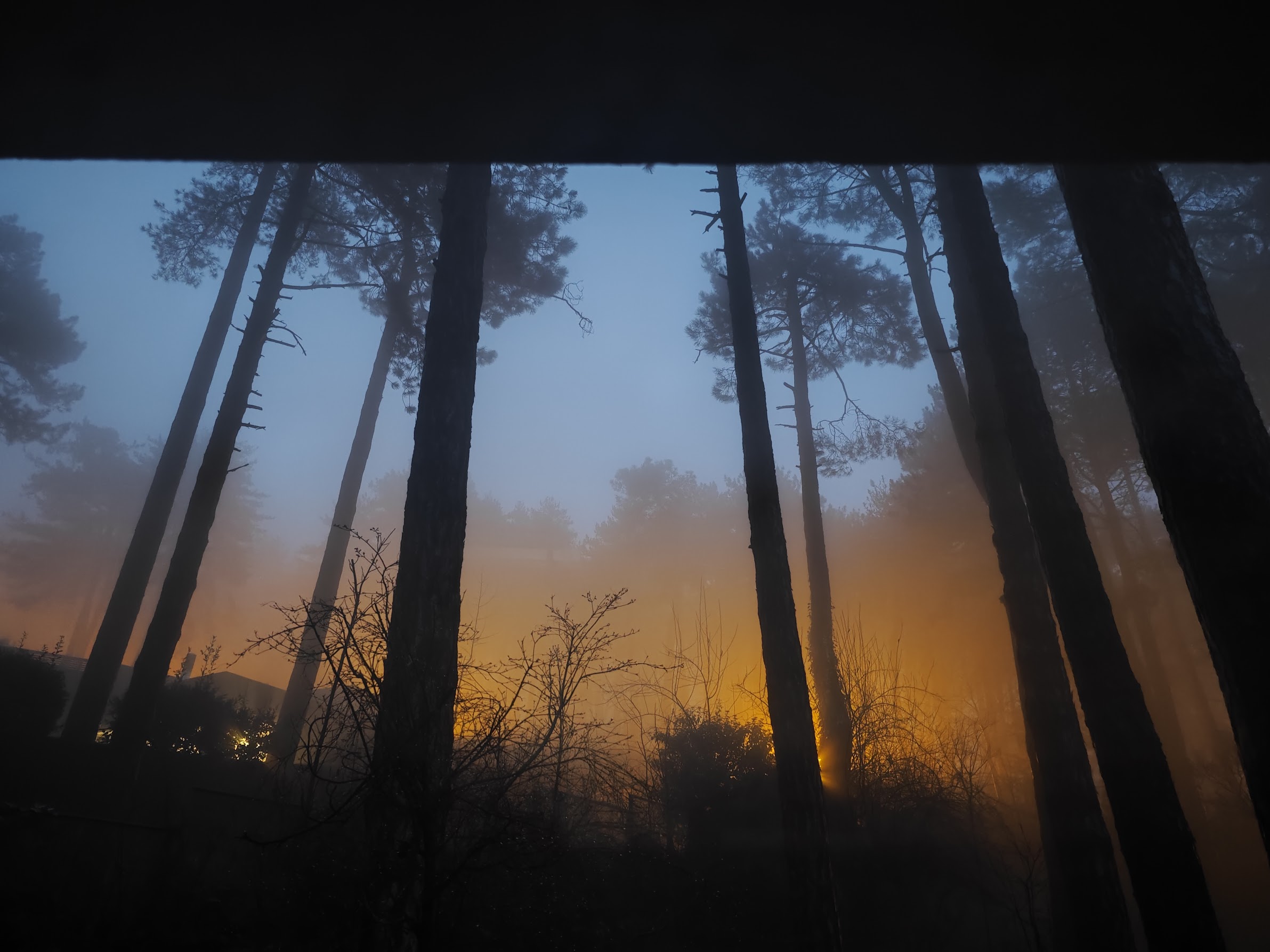
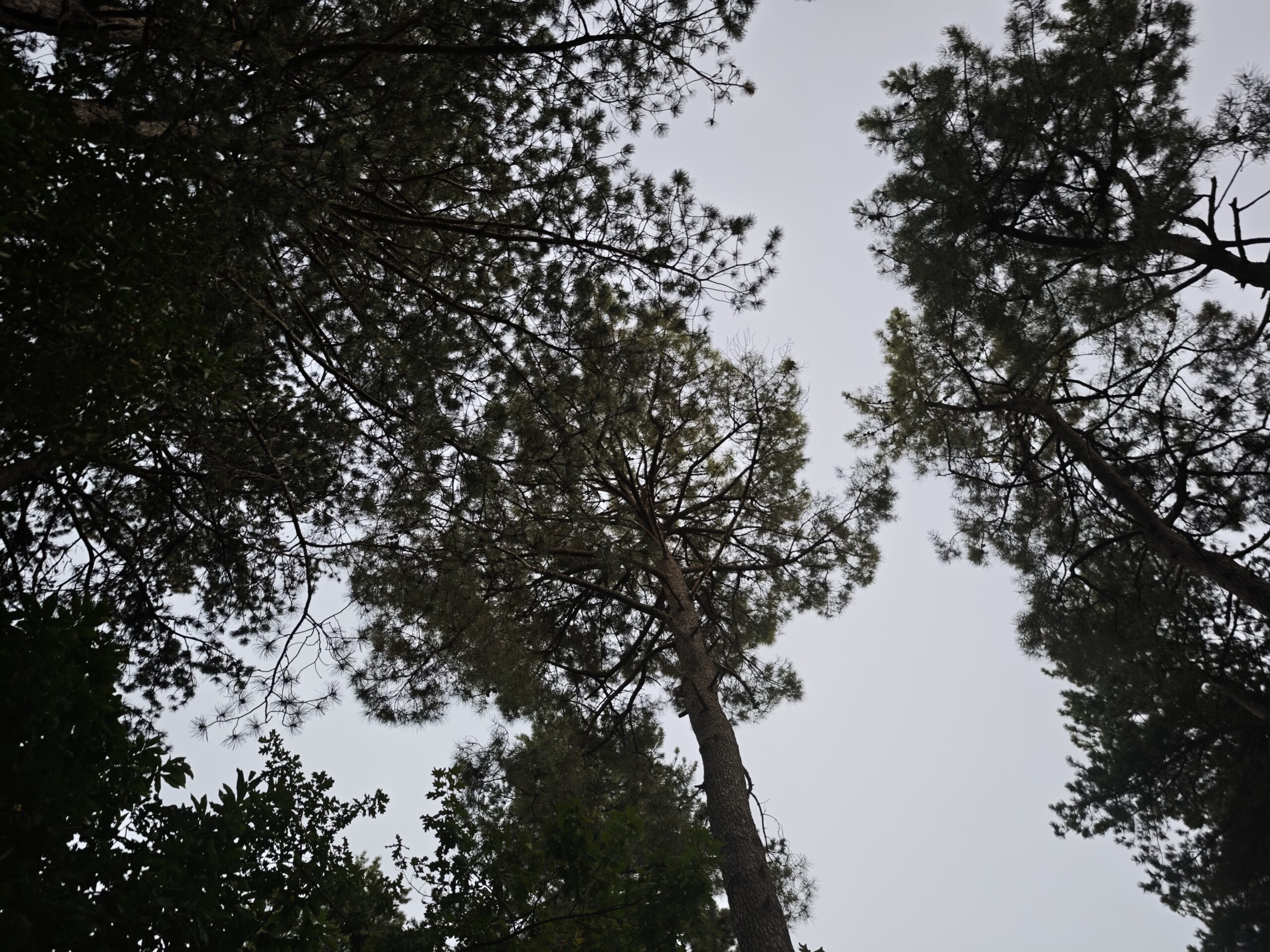
El cambio de los medios de comunicación ha ido de forma consistente en esa dirección, y ahora abro una página en el navegador de mi ordenador en mi casa en El Escorial y aparece un anuncio, vete a saber creado dónde, alojado en qué servidor, por una empresa con su domicilio fiscal en qué continente, en el que dice “en San Lorenzo de El Escorial estamos regalando audífonos a mayores de 65 años”. De hecho, en la última película de Almodóvar, de producción norteamericana y ambientada en los Estados Unidos, las dos mujeres protagonistas, interpretadas por Julianne Moore y Tilda Swinton, viajan en un momento desde la ciudad de Nueva York al norte del estado, a una casa de campo en los alrededores de Woodstock. En una escena que en la que pasean por los alrededores de la casa, entre pinos, tengo una sensación extraña, parecida, supongo a la de John en aquella ocasión, por el inquietante parecido de los árboles del estado de NY y los de El Escorial. Después, cuando hay una cámara subjetiva de la mirada de las mujeres hacia arriba, me doy cuenta de que no puede ser un parecido casual, porque ese cielo entre los pinos es el que yo veo cada mañana. Tras una búsqueda en Internet se revela que, efectivamente, esa parte de la película ha sido rodada a unos metros de mi casa.
My friend John spent some time in Logroño, my hometown, shortly after we met in Madrid. John was born in California, where his family lives, but he has been living in New York for decades. At one point in the 1980s, he took a long trip around the world, including several places in Asia and Europe, ending up in Madrid. When we met, he was working on a series of encaustic paintings. He was sad that he was running out of money and had to go back to his apartment and job in NYC without being able to finish the series. So I offered him the studio space I had in Logroño. The city was cheaper, he didn’t have to pay for a studio or accommodation, and he could concentrate on his work, which was much more difficult in Madrid in the 1980s. He spent about six months there and often came back to Madrid, where I was living at the time. The trip took four and a half hours by bus, and at that time, during the journey, they showed two films at full volume on the bus monitors, to make the journey more bearable for some passengers and more painful for others. On one occasion, travelling to Madrid, he told me that they had shown a gangster film set in New York City. As he crossed the fields of Soria, one of the scenes that had been shot in the East Village, the neighbourhood where John has his flat, was playing on the monitor. It was a peculiar situation, being on that bus, seeing those places. But the surprise turned disturbing when the protagonist in the plot entered the very building where he lived and climbed the stairs to a flat. He told me about it when he arrived, surprised by the enormous coincidence that the film had been shot in his building, we imagined that things could have gone even further, and that fhe character could have entered his own flat and rummaged through his books, his papers or his clothes. There was little chance of this happening, but there was even less chance that while travelling on the New York underground I would see a film of people entering my studio in Logroño.
At that time, there was a joke related to this, because something was happening at that moment with regard to globalisation, an underground movement of consciousness in addition to the superficial one that could be seen in the business figures between countries. In La Rioja, there are two villages called Arenzana, one next to the other, one is Arenzana de Arriba (upper) and the other is Arenzana de Abajo (lower). The protagonist of the joke is from Arenzana de Arriba, and one day he decides he wants to visit Japan. So he goes to the town square, where the bus to Logroño leaves, and asks the driver for a ticket to Japan. The driver explains that he can’t give him one, but that when he gets to Logroño, he should go to the train station and ask there. So he takes the bus to Logroño and there, at the Renfe ticket office, he asks for a ticket to Japan. The employee tells him that he can sell him a ticket to Madrid and that there he can go to the airport and ask. That’s what he does, and at the Iberia counter he buys a ticket that, after a few stopovers, allows him to travel to Tokyo. He spends a few days enjoying the country, but one day he gets tired and decides to return to his village, so he heads to one of the many train stations in Tokyo, goes to the ticket office and asks for a ticket to Arenzana. The employee replies: ‘Alenzana de Aliba or Alenzana de Abajo?’
Over the years, it doesn’t seem so funny, but you have to bear in mind that in the 1980s, Japan was a remote, unimaginable country, and Arenzana was something very close and familiar to someone born in Logroño, and it was the clash of these two conditions, in the context of growing globalisation, that justified the joke finding an audience.
The media has consistently changed in this direction, and now when I open a page on my computer at home in El Escorial, an advertisement appears, created who knows where, hosted on who knows what server, by a company with its registered office on who knows what continent, saying ‘in San Lorenzo de El Escorial we are giving away hearing aids to people over 65’. In fact, in Almodóvar’s latest film, produced in the US and set in the United States, the two female protagonists, played by Julianne Moore and Tilda Swinton, travel at one point from New York City to the north of the state, to a country house near Woodstock. In a scene where they are walking around the house, among pine trees, I have a strange feeling, similar, I suppose, to John’s on that occasion, because of the striking resemblance between the trees in New York State and those in El Escorial. Later, when there is a subjective camera shot of the women looking up, I realise that it cannot be a coincidence, because that sky between the pine trees is the one I see every morning. After searching the Internet, I discovered that this part of the film was indeed shot a few metres from my house.